On October 9 and 10, 2025, The Disability Collective held the DIScover Conference, a two-day leadership event bringing together arts professionals, accessibility advocates, and community members to focus on advancing accessibility and disability inclusion in the arts.

It was a fantastic event, coordinated and moderated by Emily Maxwell, Nathan Satore, Ali Hand and members of The Disability Collective team. All the arts trade were represented including funding, administration, communication, castings, community gatherings, and more. Discussions about buildings and stages accessibility, relaxed performances, ASL performances, identity, interpretations, inclusion, collaborations, and artistic practices filled the Daniel Spectrum building in Toronto. Each presentation and panel brought artists of the disability and Deaf community to discuss these important topics together. If the conference is too rich to be summarized in one single article, here are a few highlights. I wish I could have been present in every single room!
Opening remarks: Emily Maxwell
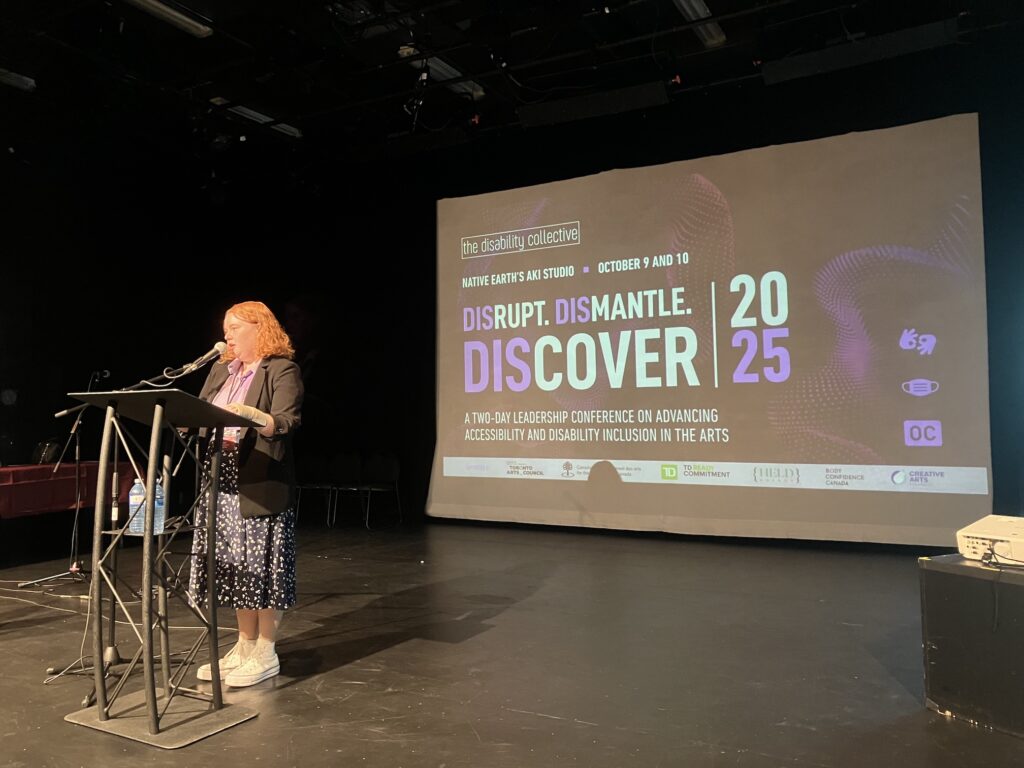
This conference took many years to prepare. Emily Maxwell, the Artistic Director and Founder of The Disability Collective, told us about what led them to create this very needed conference in the disabled artistic community. From captions to sign language interpretation, a quiet room and a mask mandate, everything was thought to make the audience members and speakers feel at ease during these two days.
She also introduced the keynote speaker, Dr. Jill Andrew, the first queer Black person elected to a provincial legislature in Canada, serving for 7 years as a Canadian politician who represented Toronto-St. Paul’s in the Legislative Assembly of Ontario from 2018 until 2025 as a member of the Ontario New Democratic Party (NDP), and who spoke about Body Awareness Day.
Presentation: Nothing About Us Without Us: Partnering with Deaf Led Theatre Companies, by Gaitrie Persaud-Killing
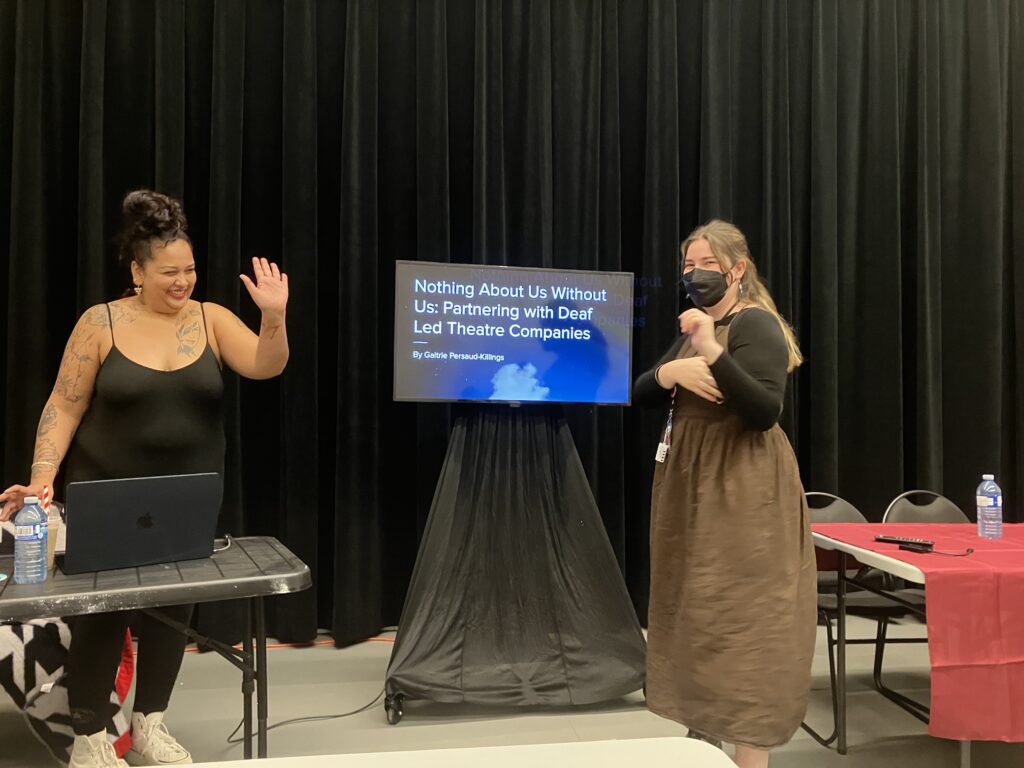
Gaitrie Persaud-Killing is an actor and theatre-maker whose work bridges the Deaf and hearing communities through the power of performance. She wears many hats: ASL coach and performer, actress on multiple TV shows, founder of Phoenix the Fire, theatre and film hub dedicated to supporting Deaf artists. ArtsAbly works with her as an ASL Music performer. Her presentation focused on the fact that Deaf performers are the less represented group in the disability and Deaf community in Canada. She mentioned dedicated lines in budgets, and the recently improved Canada Council for the Arts platform to request funds for ASL interpreters and projects integrating Deaf performers (the CAA also gave a presentation of their new funds related to disability support later in the conference). Gaitrie introduced Chris Dodd, author of the play “Deafy.” The audience members had a conversation about the presence of Deaf authors in theatre.
Panel: Casting Disabled Artists
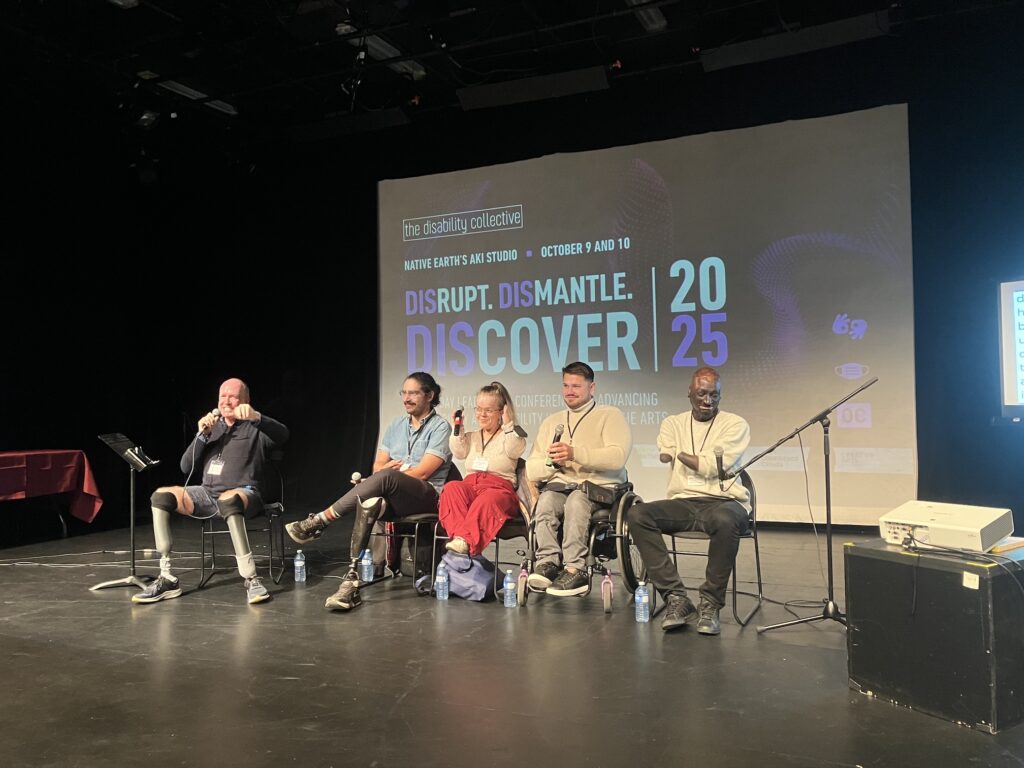
David Connolly, the Artistic Director for Drayton Entertainment and the first amputee to have performed on Broadway, moderated a panel composed of four disabled actors: Yousef Kadoura, a Lebanese Canadian actor, writer and producer, and a right leg below knee amputee, co-founded the performance collective Other HeArts; George Alevizos, a professional actor living in Toronto, was one of the first graduates in a wheelchair of any professional training program in the country; Alexia Vassos, whose name readers of this website already know since she also works with ArtsAbly, is an actor and writer based in the Greater Toronto Area, and a disability advocate very much involved in the disability arts community; Prince Amponsah, a bilateral arms amputee with burns to nearly 70% of his body, is Toronto based actor. The four actors shared they experience of castings, and the best practices to make them authentic and equitable.
Panel: Cross-Disability Collaboration
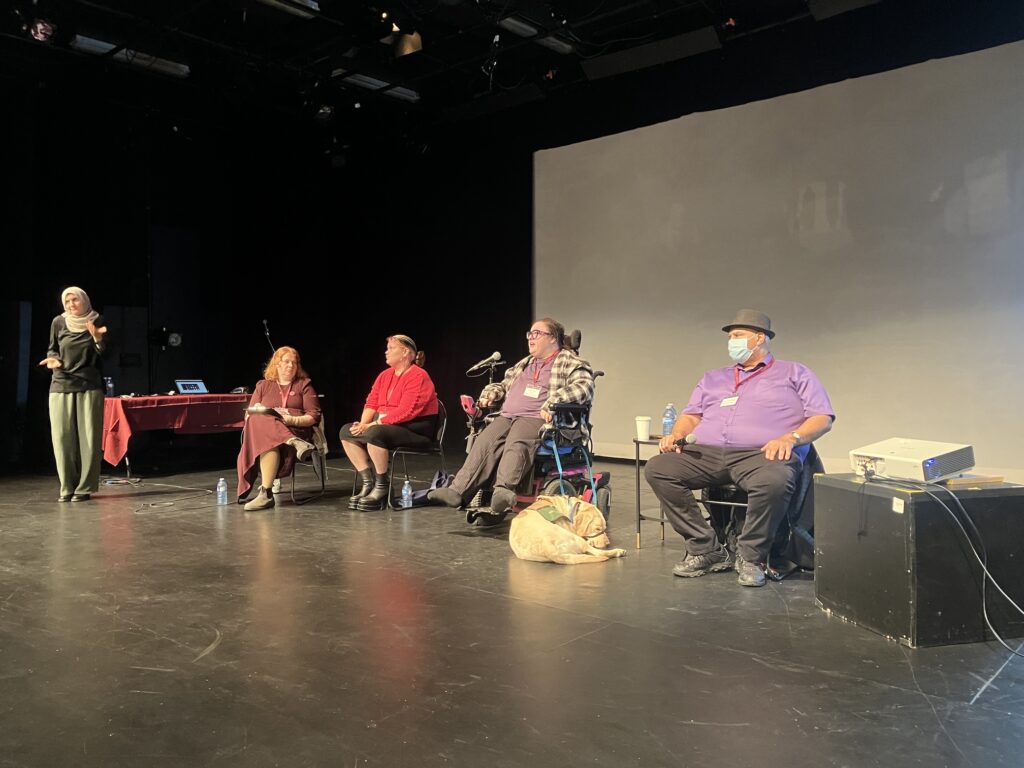
Emily Maxwell moderated a panel which brought together Deaf, disabled, neurodivergent, and Mad artists to share stories, challenges, and successes in cross-disability work: Sage Lovell is a Deaf, queer, disabled and neurodivergent artist, poet, educator, and entrepreneur; Carly Neis is a disabled actor, playwright, producer, and arts advocate with Cerebral Palsy, and a graduate of MacEwan University’s Arts and Cultural Management program; Kelly MacDonald is a blind actor, best known for his worked with AMI (Accessible Media Inc.) for nearly twenty-five years. The panel shared their lived experiences and their strategies for cross-collaborative projects in the community.
Workshop: Creative Accessibility in Performing Arts, by Maxime Beauregard and Erin Ball
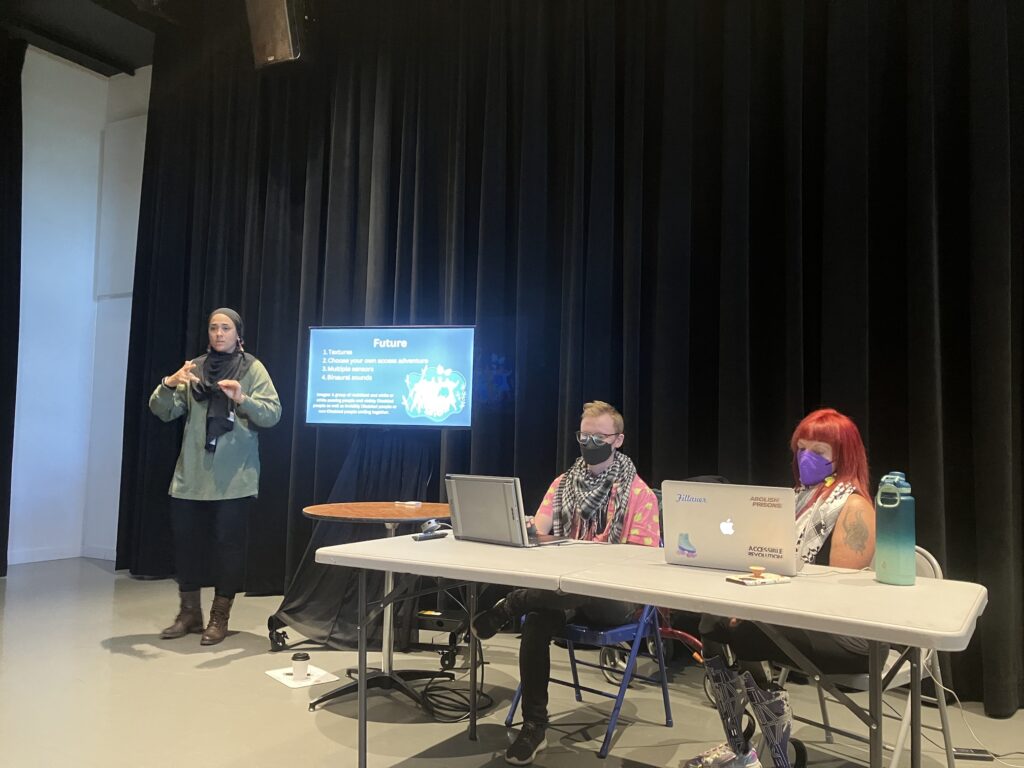
Aerial dancers Erin Ball and Maxime Beauregard are InterComplementary Journeys. Maxime is an autistic+ human, Erin is a double below knee amputee. They are both white, Queer, neuro non-conforming, and Disabled artists who seek to shift barriers in performance art. They are the creators of a course on Accessibility/Disability in Movement Practices. Both Erin and Maxime work as performers, coaches, choreographers, producers, accessibility consultants, and workshop facilitators. During the conference, they led us through their past and current projects, with the Deaf community for the integration of signs and visual representation to lyrics and movements, and with VibraFusion Lab converting movements and heart beats into vibration. Audience members were offered to relax, to move, and to think of our bodies in space.
Workshop: Better Backstages: Accessibility Hacks, by Meghan Sivani-Merrigan
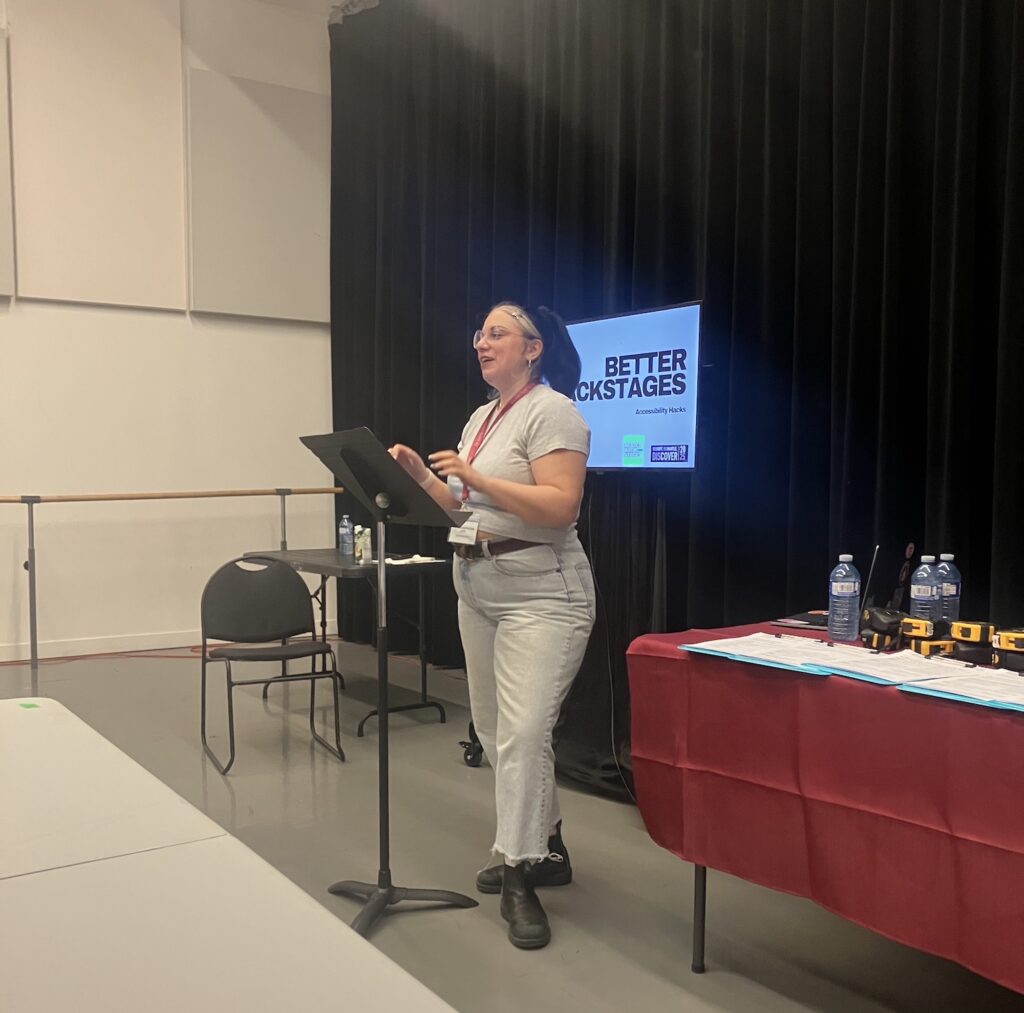
Meghan Sivani-Merrigan is the founder of Halifax-based Apex Arts Access and creator of the Better Backstages Accessibility Toolkit, providing a framework to help assess the accessibility of artistic venues. During this workshop, we used the toolkit in the first floor of the Daniel Spectrum building, where the conference took place. We were assigned specific tasks to assess doors, corridors, lights, washrooms, stages, sound, and overall accessibility. This exercise is always interesting to do since assessors realize the number of elements that are taken into consideration in accessibility.
Exhibition: 20 Years Later: The (In)Accessibility of Ontario
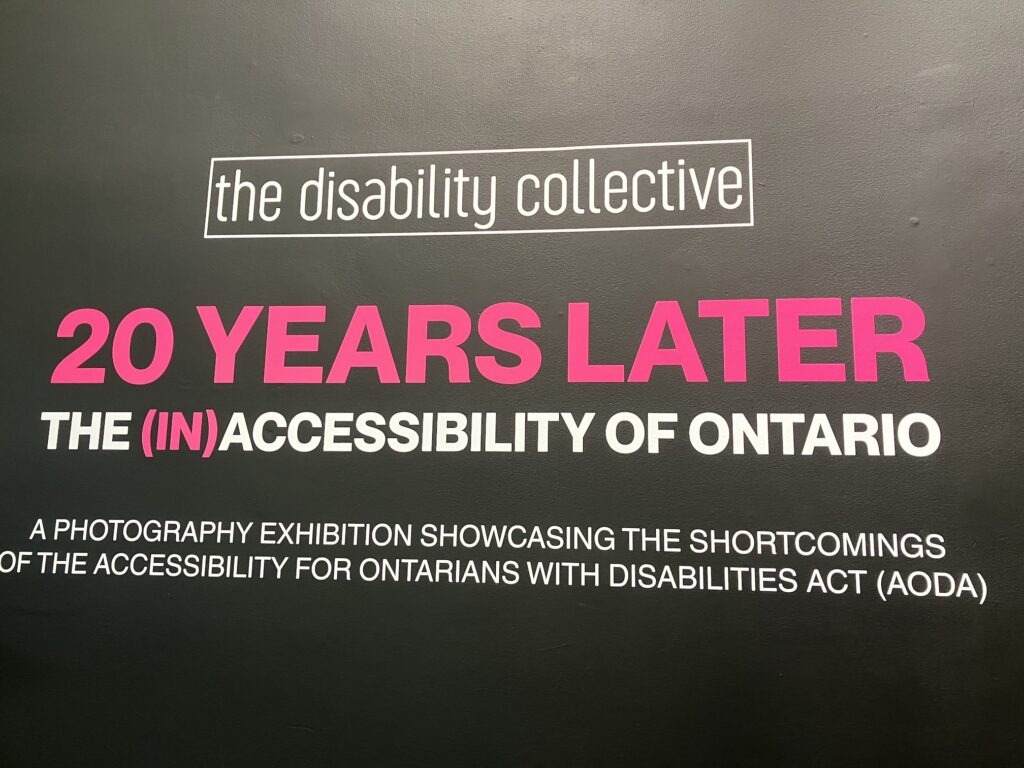
The photography exhibition titled “20 Years Later: The (In)Accessibility of Ontario”, presented by The Disability Collective, showcases the shortcomings of the Accessibility for Ontarios with Disabilities Act (AODA). It opened in Daniel Spectrum on October 9 and will be displayed until October 26. Under AODA, Ontario pledged to become fully accessible by January 1, 2025, but failed. This exhibition shows the state of accessibility crisis for people with disabilities in Ontario seen by Canadian photographers and artists.
More information about the exhibition on The Disability Collective website.
Congratulations to all the team members of The Disability Collective for their success in the organization of this conference. All activities and conversations were rich in ideas for collaboration within the community and tools for the Canadian artistic scene to become more accessible. We are all looking forward to the next edition in 2026.
Diane Kolin, for ArtsAbly.