


Scholars and great minds help us shape our ideas and analysis of situations regarding disability in the arts. Great minds have worked together on books to help us understand the principles of Critical Disability Studies. This field is fairly new and changes regularly, creating opportunities to think of where our creativity goes and what the place of disabled artists is in our society.
In this section, you will find links to digital accessible and paper versions of books. Kindle offers reading applications and tools that work with assistive technology and propose settings for all users. The digital version is usually cheaper than the paper version. For each book, you will find Amazon affiliate products, and WorldCat links for universities and libraries.
If you have an idea or a suggestion of product that you think should be added here, don’t hesitate to contact us.
Music
The Oxford Handbook of Music and Disability Studies (Oxford Handbooks) Reprint Edition
by Blake Howe (Editor), Stephanie Jensen-Moulton (Editor), Neil Lerner (Editor), Joseph Straus (Editor)
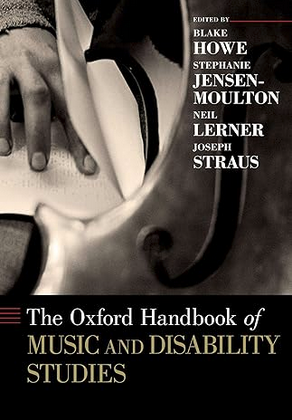
The Oxford Handbook of Disability Studies represents a comprehensive state of current research for the field of Disability Studies and Music. The forty-two chapters in the book span a wide chronological and geographical range, from the biblical, the medieval, and the Elizabethan, through the canonical classics of the eighteenth and nineteenth centuries, up to modernist styles and contemporary musical theater and popular genres, with stops along the way in post-Civil War America, Ghana and the South Pacific, and many other interesting times and places. Disability is a broad, heterogeneous, and porous identity, and that diversity is reflected in the variety of bodily conditions under discussion here, including autism and intellectual disability, deafness, blindness, mobility impairment often coupled with bodily difference, and cognitive and intellectual impairments. Amid this diversity of time, place, style, medium, and topic, the chapters share two core commitments. First, they are united in their theoretical and methodological connection to Disability Studies, especially its central idea that disability is a social and cultural construction. Disability both shapes and is shaped by culture, including musical culture. Second, these essays individually and collectively make the case that disability is not something at the periphery of culture and music, but something central to our art and to our humanity.
Link to the Kindle version: https://amzn.to/3uDSzqu
Link to the paper version: https://amzn.to/3USWlHB
Link to WorldCat for university students/staff and libraries: https://search.worldcat.org/title/910309803
Hearing Beethoven: A Story of Musical Loss & Discovery
by Robin Wallace (Author)
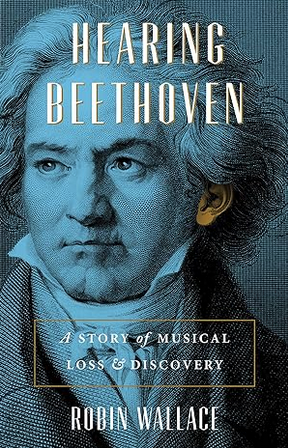
We’re all familiar with the image of a scowling Beethoven, struggling to overcome his rapidly progressing deafness. That Beethoven continued to play and compose for more than a decade after he lost his hearing is often seen as an act of superhuman heroism. But the truth is that Beethoven’s response to his deafness was entirely human. And by demystifying what he did, we can learn a great deal about Beethoven’s music. No one is better positioned to help us do so than Robin Wallace, who not only has dedicated his life to the music of Beethoven but also has close personal experience with deafness. Wallace’s late wife, Barbara, lost her hearing. Despite receiving a cochlear implant, Barbara didn’t overcome her deafness or ever function again like a hearing person. Beethoven also never overcame his deafness. But the composer accomplished something even more challenging: he adapted to his hearing loss and changed the way he interacted with music, revealing important aspects of its very nature in the process. Wallace tells the story of Beethoven’s creative life, interweaving it with his and Barbara’s experience to reveal aspects that only living with deafness could open up. The result makes Beethoven and his music more accessible, helping us see how a disability can enhance human wholeness.
Link to the Kindle version: https://amzn.to/3wg6kfO
Link to the paper version: https://amzn.to/3ujYNfn
Link to WorldCat for university students/staff and libraries: https://search.worldcat.org/title/1019844973
Extraordinary Measures: Disability in Music 1st Edition
c
Approaching disability as a cultural construction rather than a medical pathology, this book studies the impact of disability and concepts of disability on composers, performers, and listeners with disabilities, as well as on discourse about music and works of music themselves. For composers with disabilities–like Beethoven, Delius, and Schumann–awareness of the disability sharply inflects critical reception. For performers with disabilities–such as Itzhak Perlman and Evelyn Glennie–the performance of disability and the performance of music are deeply intertwined. For listeners with disabilities, extraordinary bodies and minds may give rise to new ways of making sense of music. In the stories that people tell about music, and in the stories that music itself tells, disability has long played a central but unrecognized role. Some of these stories are narratives of overcoming-the triumph of the human spirit over adversity-but others are more nuanced tales of accommodation and acceptance of life with a non-normative body or mind. In all of these ways, music both reflects and constructs disability.
Link to the Kindle version: https://amzn.to/49w9Lgs
Link to the paper version: https://amzn.to/3SCtYuo
Link to WorldCat for university students/staff and libraries: https://search.worldcat.org/title/609101212
Sounding Off: Theorizing Disability in Music
by Neil Lerner (Editor), Joseph N. Straus (Editor)
Disability, understood as culturally stigmatized bodily difference (including physical and mental impairments of all kinds), is a pervasive and permanent aspect of the human condition. While the biology of bodily difference is the proper study for science and medicine, the meaning that we attach to bodily difference is the proper study of humanists. The interdisciplinary field of Disability Studies has recently emerged to theorize social and cultural constructions of the meaning of disability. Although there has been an astonishing outpouring of humanistic work in Disability Studies in the past ten years, there has been virtually no echo in musicology or music theory. Sounding Off: Theorizing Disability in Music is the first book-length work to focus on the historical and theoretical issues of music as it relates to disability. It shows that music, like literature and the other arts, simultaneously reflects and constructs cultural attitudes toward disability. Sounding Off: Theorizing Disability in Music promises to be a landmark study for scholars and students of music, disability, and culture.
Link to the paper version: https://a.co/d/g9gUt7R
Link to WorldCat for university students/staff and libraries: https://search.worldcat.org/title/64585773
Cultural Narratives of Old Age in the Lives, Work, and Reception of Old Musicians
by Joseph N. Straus (Author)
Operating largely within the world of European-American classical music, this book discusses the creative work of old musicians―composers, performers, listeners, and scholars―and how those forms of music- making are received and understood. Like everything else about old age, music-making is usually understood as a decline from a former height, a deficiency with respect to a youthful standard. Against this ageist mythology, this book argues that composing oldly, performing oldly, and listening oldly are distinctive and valuable ways of making music―a difference, not a deficit; to be celebrated, not ignored or condemned. Instead of the usual biomedical or gerontological understanding of old age, with its focus on bodily, cognitive, and sensory decline, this book follows Age Studies in seeing old age through a cultural lens, as something created and understood in culture. This book seeks to identify the ways that old musicians (composers, performers, listeners, and scholars) accept, resist, adapt, and transform the cultural scripts for the performance of old age. Musicking oldly (making music in old age) often represents an attempt to rewrite ageist cultural scripts and to find ways of flourishing musically in a largely hostile landscape.
Link to the paper version: https://a.co/d/7YkmJQX
Link to WorldCat for university students/staff and libraries: https://search.worldcat.org/title/1440045062
Seeing Voices: Analyzing Sign Language Music
by Anabel Maler (Author)
We often think of music in terms of sounds intentionally organized into patterns, but music performed in signed languages poses considerable challenges to this sound-based definition. Performances of sign language music are defined culturally as music, but they do not necessarily make sound their only–or even primary–mode of transmission. How can we analyze and understand sign language music? And what can sign language music tell us about how humans engage with music more broadly? In Seeing Voices: Analyzing Sign Language Music, author Anabel Maler argues that music is best understood as culturally defined and intentionally organized movement, rather than organized sound. This re-definition of music means that sign language music, rather than being peripheral or marginal to histories and theories about music, is in fact central and crucial to our understanding of all musical expression and perception. Sign language music teaches us a great deal about how, when, and why movement becomes musical in a cultural context, and urges us to think about music as a multisensory experience that goes beyond the sense of hearing.
Link to the paper version: https://a.co/d/3RvNSIc
Link to WorldCat for university students/staff and libraries: https://search.worldcat.org/title/1452598198
Disability and Musicking: Resistance, Defiance, and Innovation
by Leon de Bruin (Editor), Anthea Skinner (Editor), Jane Southcott (Editor)
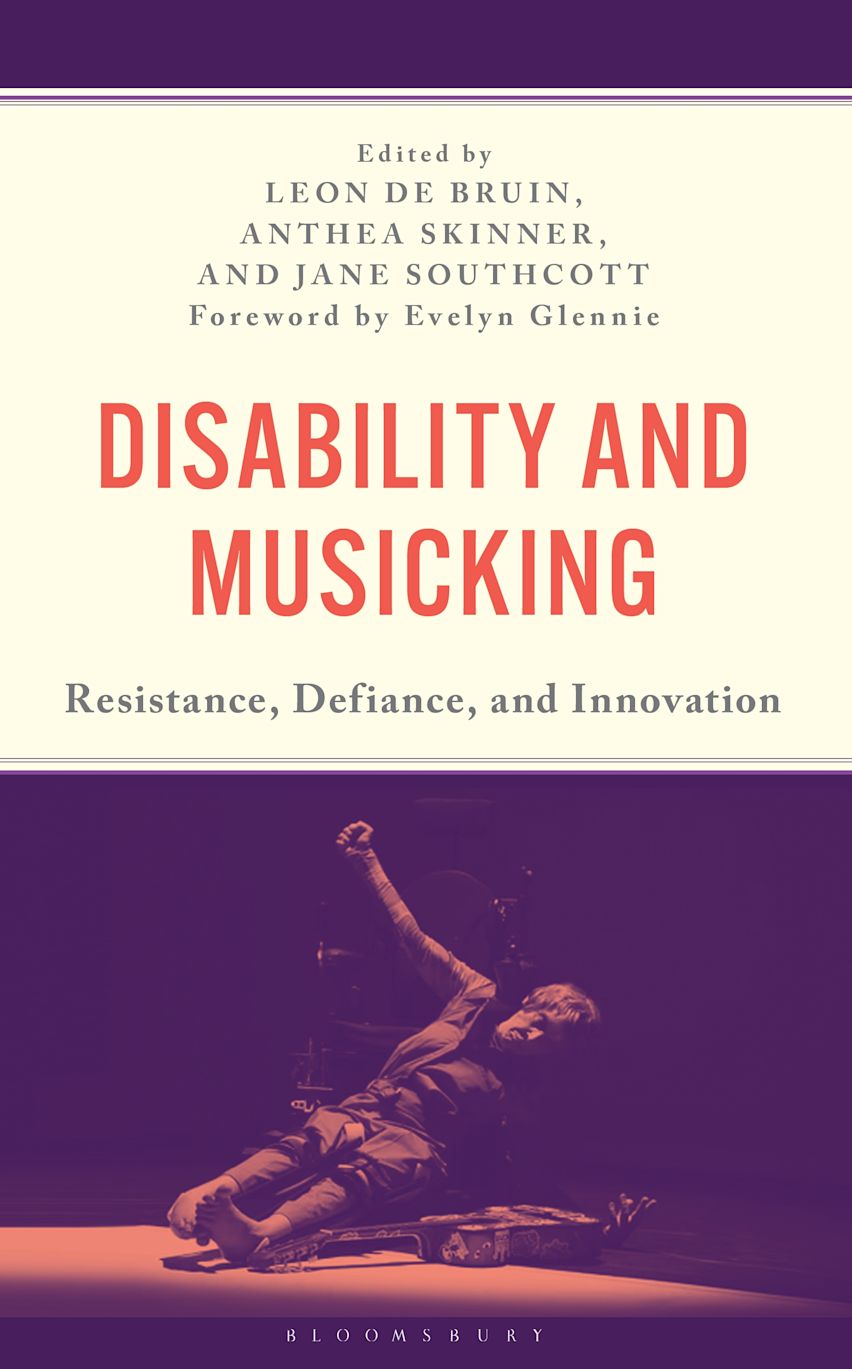
Musicking, Resistances and Disabilities sets to rework the social resources and social movements perceived in disability studies by challenging approaches wherein music is detached from the social relationships in which it is produced, transmitted, used, and judged. The authors contribute compelling insights of disabled musicking, balancing experience of time, engagement and experiential encounters with personal creativity, and temporal existence. Adopting a new turn in critical disability studies, this book asserts democratic, equitable, inclusive, accessible, emancipatory, and innovative practices in disabled musicking, and the creative and innovative experimentation in musicmaking practices that highlight a new sociocultural and performative paradigm for disabled musicking worldwide.
Link to the paper version: https://www.bloomsburycollections.com/monograph?docid=b-9798216198512
Link to WorldCat for university students/staff and libraries: https://search.worldcat.org/title/1546966717
Theatre
Disability Theatre and Modern Drama: Recasting Modernism (Critical Companions) 1st Edition
by Kirsty Johnston (Author)
Bertolt Brecht’s silent Kattrin in Mother Courage, or the disability performance lessons of his Peachum in The Threepenny Opera; Tennessee Williams’ limping Laura Wingfield in The Glass Menagerie and hard-of-hearing Bodey in A Lovely Sunday for Creve Coeur; Samuel Beckett’s blind Hamm and his physically disabled parents Nagg and Nell in Endgame – these and many further examples attest to disability’s critical place in modern drama. This Companion explores how disability performance studies and theatre practice provoke new debate about the place of disability in these works. The book traces the local and international processes and tensions at play in disability theatre, and offers a critical investigation of the challenges its aesthetics pose to mainstream and traditional practice. The book’s first part surveys disability theatre’s primary principles, critical terms, internal debates and key challenges to theatre practice. Examining specific disability theatre productions of modern drama, it also suggests how disability has been re-envisaged and embodied on stage. In the book’s second part, leading disability studies scholars and disability theatre practitioners analyse and creatively re-imagine modern drama, demonstrating how disability aesthetics press practitioners and scholars to rethink these works in generative, valuable and timely ways.
Link to the Kindle version: https://amzn.to/3wcp3Zu
Link to the paper version: https://amzn.to/3SA67eT
Link to WorldCat for university students/staff and libraries: https://search.worldcat.org/title/938563197
Multidisciplinary
Disability and Art History (Interdisciplinary Disability Studies) 1st Edition
by Ann Millett-Gallant (Editor), Elizabeth Howie (Editor)
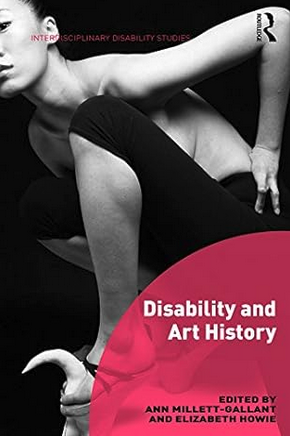
This is the first book of its kind to feature interdisciplinary art history and disability studies scholarship. Art historians have traditionally written about images of figures with impairments and artworks by disabled artists, without integrating disability studies scholarship, while many disability studies scholars discuss works of art, but do not necessarily incorporate art historical research and methodology. The chapters in this volume emphasize a shift away from the medical model of disability that is often scrutinized in art history by considering the social model and representations of disabled figures from a range of styles and periods, mostly from the twentieth century. Topics addressed include visible versus invisible impairments; scientific, anthropological, and vernacular images of disability; and the theories and implications of looking/staring versus gazing. They also explore ways in which art responds to, envisions, and at times stereotypes and pathologizes disability. The insights offered in this book contextualize understanding of disability historically, as well as in terms of medicine, literature, and visual culture.
Link to the Kindle version: https://amzn.to/3wa669L
Link to the paper version: https://amzn.to/49scirX
Link to WorldCat for university students/staff and libraries: https://search.worldcat.org/title/962813418
Contemporary Art and Disability Studies (Routledge Advances in Art and Visual Studies)
by Alice Wexler (Author) and John Derby (Author)
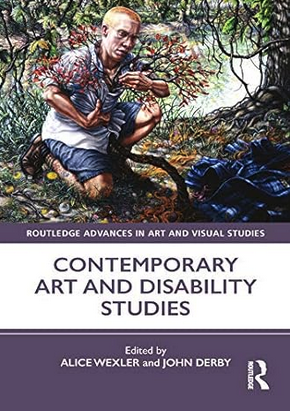
This book presents interdisciplinary scholarship on art and visual culture that explores disability in terms of lived experience. It will expand critical disability studies scholarship on representation and embodiment, which is theoretically rich, but lacking in attention to art. It is organized in five thematic parts: methodologies of access, agency, and ethics in cultural institutions; the politics and ethics of collaboration; embodied representations of artists with disabilities in the visual and performing arts; negotiating the outsider art label; and first-person reflections on disability and artmaking. This volume will be of interest to scholars who study disability studies, art history, art education, gender studies, museum studies, and visual culture.
Link to the Kindle version: https://amzn.to/49esqh9
Link to the paper version: https://amzn.to/3SSgQm1
Link to WorldCat for university students/staff and libraries: https://search.worldcat.org/title/1130020463
The Art of Disability: A handbook about Disability Representation in Media
by David Proud (Author)
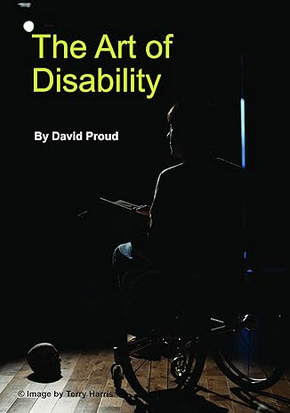
“All the worlds a stage, and both have bad wheelchair access.” Led by David Proud and sharing his decade of experience working as an Actor, Writer and Producer for some of the world’s leading broadcasters, we embark on a journey into disability representation in media. Can disability be seen as an art Why is it important to modern day culture? How can we increase diversity of disability in media? Featuring contributions from leading industry figures the book covers all disciplines and offers practical advice to anyone working with disabled artists. Providing a ground breaking methodology to help new disabled actors approach acting with a disability. Your accessible journey into disability diversity starts here.
Link to the Kindle version: https://amzn.to/42wR229
Link to the paper version: https://amzn.to/3UAz2Sn
Link to WorldCat for university students/staff and libraries: https://search.worldcat.org/title/1018086533
Disability Arts and Culture: Methods and Approaches
by Petra Kuppers (Editor)
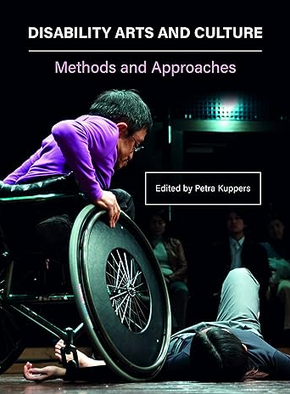
This collection offers insight into different study approaches to disability art and culture practices, and asks: what does it mean to approach disability-focused cultural production and consumption as generative sites of meaning-making? International scholars and practitioners use ethnographic and participatory action research approaches; textual and discourse analysis; as well as other methods to discover how disability figures into our contemporary world(s). Chapters within the collection explore, amongst other topics, deaf theatre productions, representations of disability on-screen, community engagement projects and disabled bodies in dance. Disability Arts and Culture provides a comprehensive overview and a range of case studies benefitting both the practitioner and scholar.
Link to the Kindle version: https://amzn.to/4bAYkWD
Link to the paper version: https://amzn.to/3uuKzYY
Link to WorldCat for university students/staff and libraries: https://search.worldcat.org/title/1065720395
Disability and Contemporary Performance: Bodies on the Edge
by Petra Kuppers (Author)
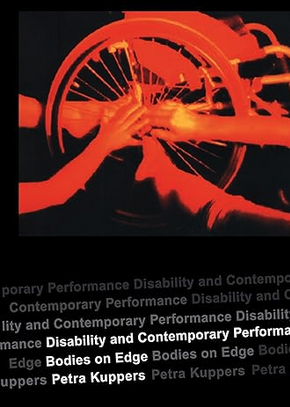
Disability and Contemporary Performance presents a remarkable challenge to existing assumptions about disability and artistic practice. In particular, it explores where cultural knowledge about disability leaves off, and the lived experience of difference begins. Petra Kuppers, herself an award-winning artist and theorist, investigates the ways in which disabled performers challenge, change and work with current stereotypes through their work. She explores freak show fantasies and ‘medical theatre’ as well as live art, webwork, theatre, dance, photography and installations, to cast an entirely new light on contemporary identity politics and aesthetics. This is an outstanding exploration of some of the most pressing issues in performance, cultural and disability studies today, written by a leading practitioner and critic.
Link to the Kindle version: https://amzn.to/490wSA1
Link to the paper version: https://amzn.to/49tX4Tv
Link to WorldCat for university students/staff and libraries: https://search.worldcat.org/title/52738262
Concerto for the Left Hand: Disability and the Defamiliar Body
by Michael Davidson (Author)
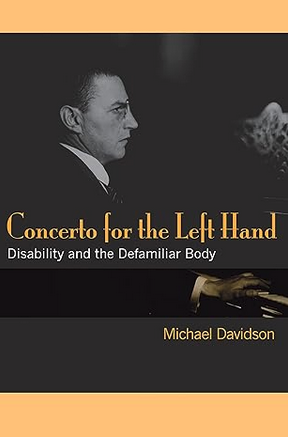
Concerto for the Left Hand is at the cutting edge of the expanding field of disability studies, offering a wide range of essays that investigate the impact of disability across various art forms—including literature, performance, photography, and film. Rather than simply focusing on the ways in which disabled persons are portrayed, Michael Davidson explores how the experience of disability shapes the work of artists and why disability serves as a vital lens through which to interpret modern culture. Covering an eclectic range of topics—from the phantom missing limb in film noir to the poetry of American Sign Language—this collection delivers a unique and engaging assessment of the interplay between disability and aesthetics. Written in a fluid, accessible style, Concerto for the Left Hand will appeal to both specialists and general audiences. With its interdisciplinary approach, this book should appeal not only to scholars of disability studies but to all those working in minority art, deaf studies, visual culture, and modernism.
Link to the Kindle version: https://amzn.to/49NuZXB
Link to the paper version: https://amzn.to/49vJGxY
Link to WorldCat for university students/staff and libraries: https://search.worldcat.org/title/680017744
Disability, Media, and Representations: Other Bodies (Routledge Research in Disability and Media Studies)
by Jacob Johanssen (Editor), Diana Garrisi (Editor)
Bringing together scholars from around the world to research the intersection between media and disability, this edited collection aims to offer an interdisciplinary exploration and critique of print, broadcast and online representations of physical and mental impairments. Drawing on a wide range of case studies addressing how people can be ‘othered’ in contemporary media, the chapters focus on analyses of hateful discourses about disability on Reddit, news coverage of disability and education, media access of individuals with disabilities, the logic of memes and brain tumour on Twitter, celebrity and Down Syndrome on Instagram, disability in TV drama, the metaphor of disability for the nation; as well as an autoethnography of treatment of breast cancer. Providing a much-needed global perspective, Disability, Media, and Representations examines the relationship between self-representation and representations in either reinforcing or debunking myths around disability, and ways in which academic discourse can be differently articulated to study the relationship between media and disability. This book will be of interest to students and researchers of disability studies and media studies as well as activists and readers engaged in debates on diversity, inclusivity and the media.
Link to the Kindle version: https://amzn.to/3SUg5rJ
Link to the paper version: https://amzn.to/3SRcBay
Link to WorldCat for university students/staff and libraries: https://search.worldcat.org/title/1142870289
Documentary and Disability
by Catalin Brylla (Editor), Helen Hughes (Editor)
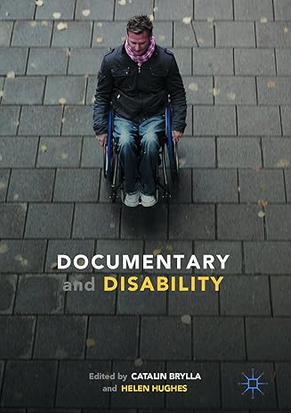
This edited collection of contributions from media scholars, film practitioners and film historians connects the vibrant fields of documentary and disability studies. Documentary film has not only played an historical role in the social construction of disability but continues to be a strong force for expression, inclusion and activism. Offering essays on the interpretation and conception of a wide variety of documentary formats, Documentary and Disability reveals a rich set of resources on subjects as diverse as Thomas Quasthoff’s opera performances, Tourette syndrome in the developing world, queer approaches to sexual functionality, Channel 4 disability sports broadcasting, the political meaning of cochlear implant activation, and Christoph’s Schlingensief’s celebrated Freakstars 3000.
Link to the Kindle version: https://amzn.to/42C61Yv
Link to the paper version: https://amzn.to/42CJ7R6
Link to WorldCat for university students/staff and libraries: https://search.worldcat.org/title/1004377933
Freakery: Cultural Spectacles of the Extraordinary Body
by Rosemarie Garland Thomson (Editor)
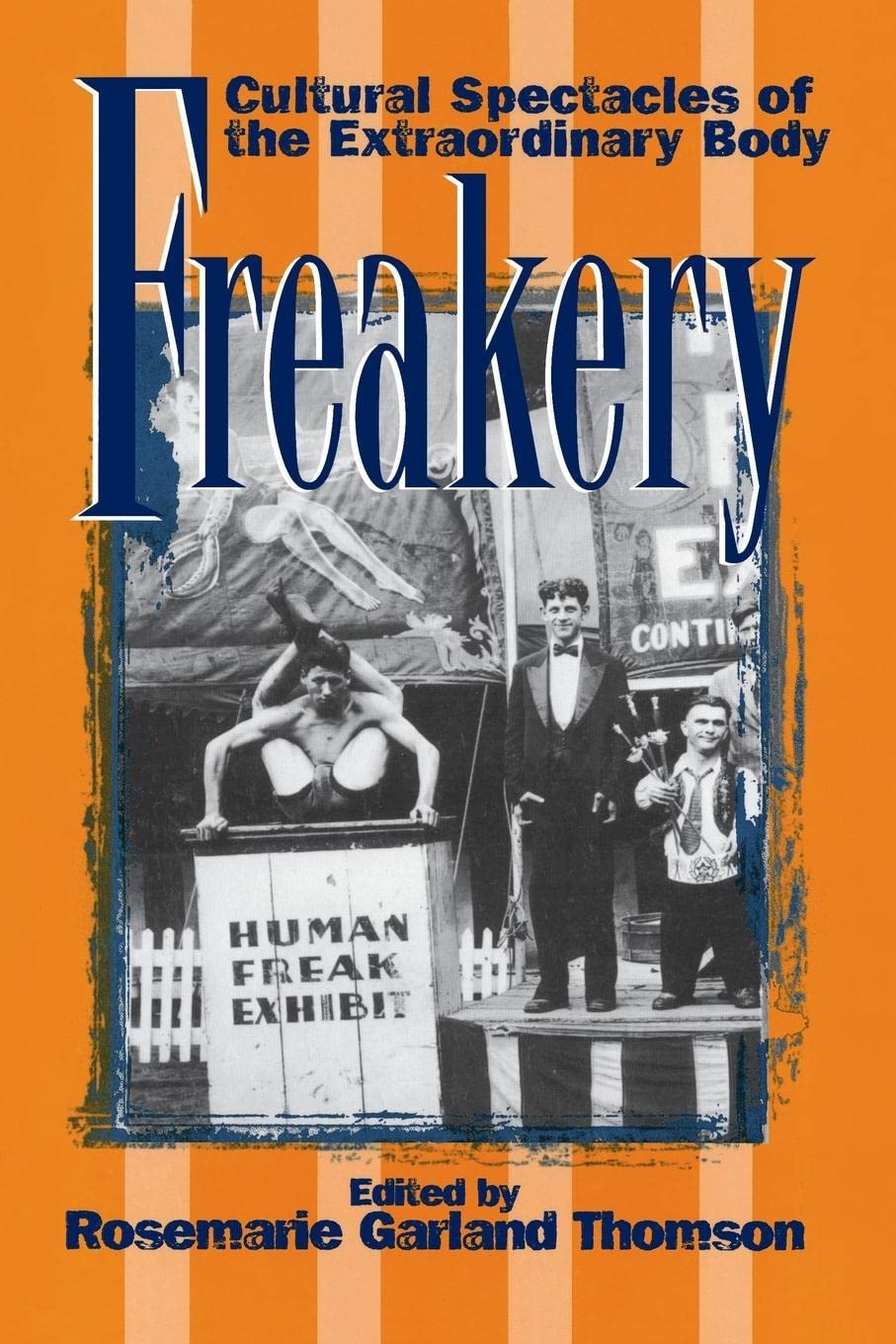
Giants. Midgets. Tribal non-Westerners. The very fat. The very thin. Hermaphrodites. Conjoined twins. The disabled. The very hirsute. In American history, all have shared the platform equally, as freaks, human oddities, their only commonality their assigned role of anomalous other to the gathered throngs. For the price of a ticket, freak shows offered spectators an icon of bodily otherness whose difference from them secured their own membership in a common American identity–by comparison ordinary, tractable, normal. Rosemarie Thomson’s groundbreaking anthology probes America’s disposition toward the visually different. The book’s essays fall into four main categories: historical explorations of American freak shows in the era of P.T. Barnum; the articulation of the freak in literary and textual discourses; contemporary relocations of freak shows; and theoretical analyses of freak culture. Essays address such diverse topics as American colonialism and public presentations of natives; laughing gas demonstrations in the 1840’s; Shirley Temple and Tom Thumb; Todd Browning’s landmark movie Freaks; bodybuilders as postmodern freaks; freaks in Star Trek; Michael Jackson’s identification with the Elephant Man; and the modern talk show as a reconfiguration of the freak show. In her introduction, Thomson traces the freak show from antiquity to the modern period and explores the constitutive, political, and textual properties of such exhibits.
Link to the paper version: https://a.co/d/dpRwHH8
Link to WorldCat for university students/staff and libraries: https://search.worldcat.org/en/title/34517618
Extraordinary Bodies: Figuring Physical Disability in American Culture and Literature
by Rosemarie Garland Thomson (Author)
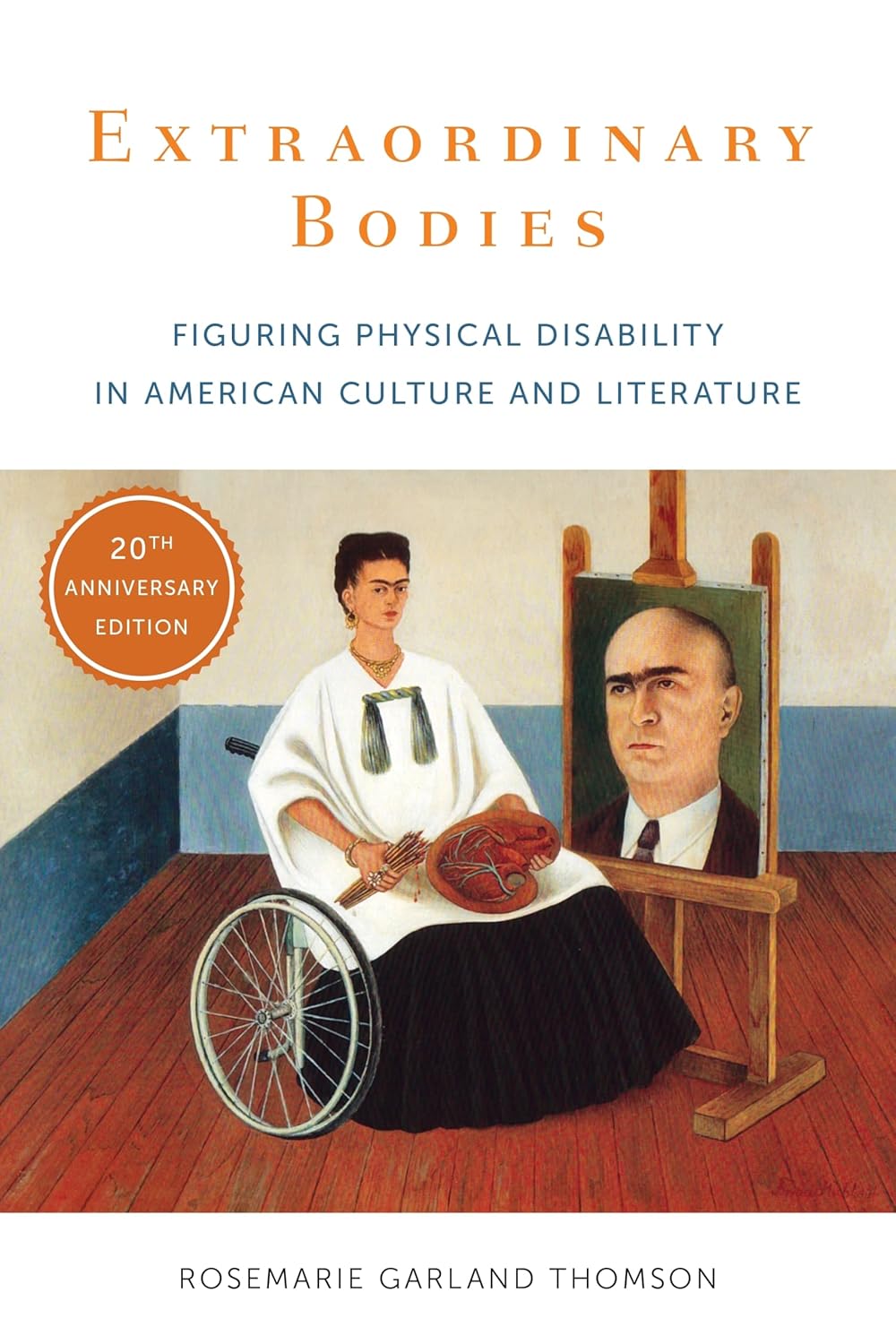
Extraordinary Bodies is a cornerstone text of disability studies, establishing the field upon its publication in 1997. Framing disability as a minority discourse rather than a medical one, the book added depth to oppressive narratives and revealed novel, liberatory ones. Through her incisive readings of such texts as Harriet Beecher Stowe’s Uncle Tom’s Cabin and Rebecca Harding Davis’s Life in the Iron Mills, Rosemarie Garland-Thomson exposed the social forces driving representations of disability. She encouraged new ways of looking at texts and their depiction of the body and stretched the limits of what counted as a text, considering freak shows and other pop culture artifacts as reflections of community rites and fears. Garland-Thomson also elevated the status of African-American novels by Toni Morrison and Audre Lorde. Extraordinary Bodies laid the groundwork for an appreciation of disability culture and an inclusive new approach to the study of social marginalization.
Link to the paper version: https://a.co/d/b7RXXvZ
Link to WorldCat for university students/staff and libraries: https://search.worldcat.org/en/title/1038701039