


On February 27 and 28, 2026, we completed our inaugural Music and Collective Access Symposium at St. John’s College, UBC, in Vancouver, and online. It was a successful event. This final report will go back to the origins of the event, give some insights into its different steps, and highlight the content of the symposium.
The program is still available on the symposium’s website: https://www.musiccollectiveaccess.com/.
Origins of the project and budget
The idea of the symposium was born from a conversation between Dr. Anabel Maler, Assistant Professor of Music Theory at the University of British Columbia School of Music, and Dr. Diane Kolin, Founder and Director of ArtsAbly, during the summer of 2025, about planning ArtsAbly workshops in Vancouver. From workshops, the possibility of a symposium quickly emerged, and Dr. Stefan Sunandan Honisch, Sessional Lecturer at the University of British Columbia Department of Theatre and Film, joined the discussions.
We spent part of our summer and fall academic periods applying for grants. With a team of scholars from UBC and York University (in Toronto, where Diane completed her PhD), we could look at academic funding possibilities. Thanks to the advice and support of our colleague adam patrick bell, Associate Professor of Music Education at Western University and principal investigator of several projects funded by the Social Sciences and Humanities Research Council of Canada (SSHRC), we were granted a Canadian Accessible Musical Instruments Network (CAMIN) Partnership Development Grant and a Facilitating Anti-Ableist Remote Music Making (FAARMM) Race, Gender and Diversity Initiative grant. Our application for the UBC Strategic Equity & Anti-Racism (StEAR) Enhancement Fund was also successful, thanks to which we could include an additional community partner to our project. We chose Kickstart Disability Arts & Culture, an active nonprofit based in Vancouver, who accepted to join the adventure.
Timeline, objectives, and service providers
The timeline was tight. The results of our funding applications were communicated in November and December, which left only a few weeks for a Call for Papers (lectures and lecture-recitals) for a symposium planned at the end of February. The workshops were already secured. Our Call for Papers, sent to both academic circles and the disability and arts community, was launched on November 18th and closed on December 15th. The submissions were numerous, to the point that we almost regretted not to have planned for three days of symposium to be able to accept more presenters. The co-organizers proceeded to do a blind review of the submissions, after which we selected 16 presenters, in addition to the 4 workshop leaders already planned.
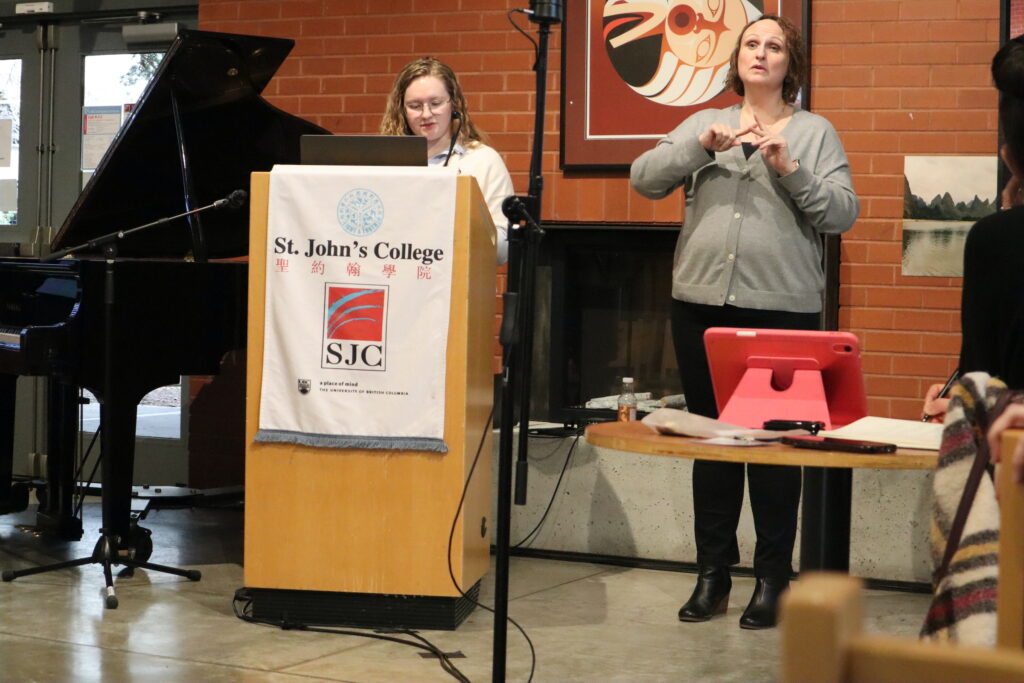
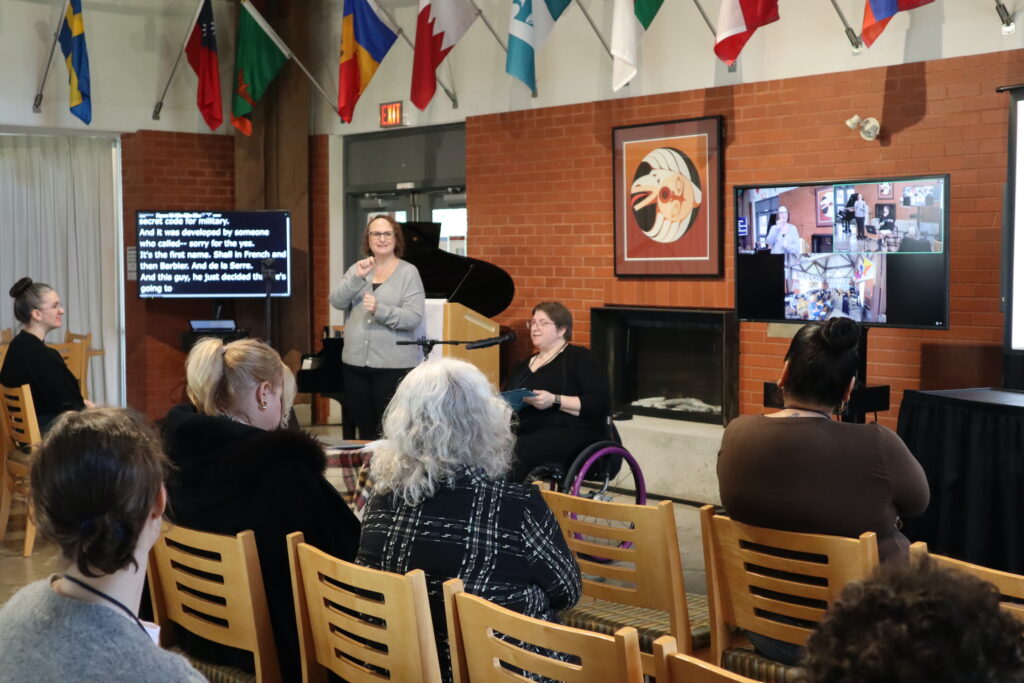
We also challenged ourselves to make the symposium as accessible as possible, meaning that it would be entirely free, hybrid (in person and remote for participants and presenters who could not travel to Vancouver), in an accessible venue for participants joining in person, with meals included for the two days (breakfast, lunch and dinner), with captions and ASL interpretation in the room and online, a program available in Braille, an access guide for the event, and a quiet room near the conference room.
We fulfilled all these objectives.
The ASL interpretation company was Still Interpreting Inc, based in Vancouver. The two interpreters who stayed with us during the event, Alana McKenna and Carly Pokoradi, were fantastic.
The CART services (captions) were provided by Accurate Realtime Inc., also based in Vancouver. Our captioner for the event, Pam Heggie, was very efficient.
ArtsAbly coordinated the access guide with the assistance of a dedicated and diligent student, Connor Braaten, who spent some time in our venue to take measurements and pictures. The result is published on the symposium’s website.
We hired eight UBC students who helped us onsite, from the registration table to the technical assistance in the room, chat conversations monitoring, and the timing control: Alex Pawlowski, Anastasia Lutsenko, Anmneet Bamra, Connor Braaten, Grace Wang, Katrina Carlucci, Mayvelee Bugh and Sheliza Virani.
Our caterer was Loafe, a café on UBC campus who served delicious meals, taking into account allergies and food preferences. We particularly appreciated their flexibility in adjusting our meals and adding an extra pot of coffee when needed. Special thanks to Ashleigh and Emma for their presence and their smiles.
The Audio-Visual services were provided by the UBC AV Team, Chris and Riley, who installed the equipment, managed the captions and ASL interpreters displays in person and online, and made sure online participants and presenters could join.
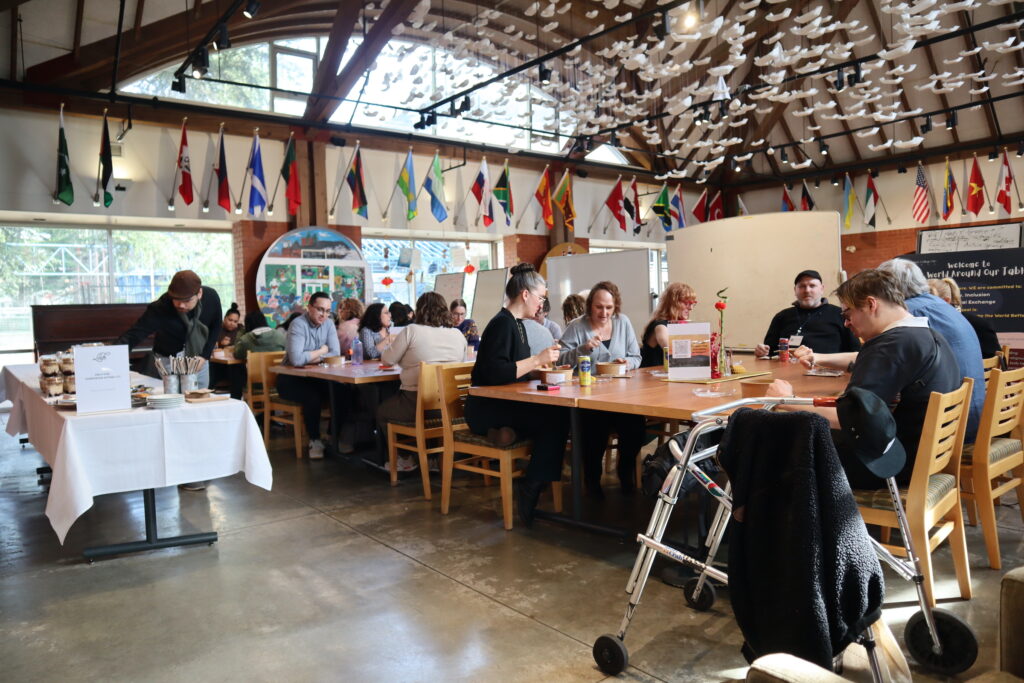
I kept the most important partner for the end. The symposium would not have met all these milestones without the continuous support of the St. John’s College team, before and during the event: Jennifer Lu, Stacy Barber, Reihaneh Bahrinejada and Yuki Kaneki. The symposium took place in the College’s Social Lounge. Our meals were taken in the Dinning Hall. Our quiet room was close to the administration. From accommodations to equipment, from document printing to rooms settings, from kindness to laughter, they were always available to help. We felt valued and welcomed. Sadly, we were the last event planned at this location since this beautiful building, with its charm and its flags representing the countries of the residents, will be demolished in May and replaced by towers in the next two years.
Symposium lectures
To kick off our Music and Collective Access Symposium, Paula Gómez Martín presented three works by Virginia Woolf, To the Lighthouse, The Waves, and Mrs. Dalloway, through lenses of multisensory modes of listening and the Disability Justice’s principle of Collective Access.
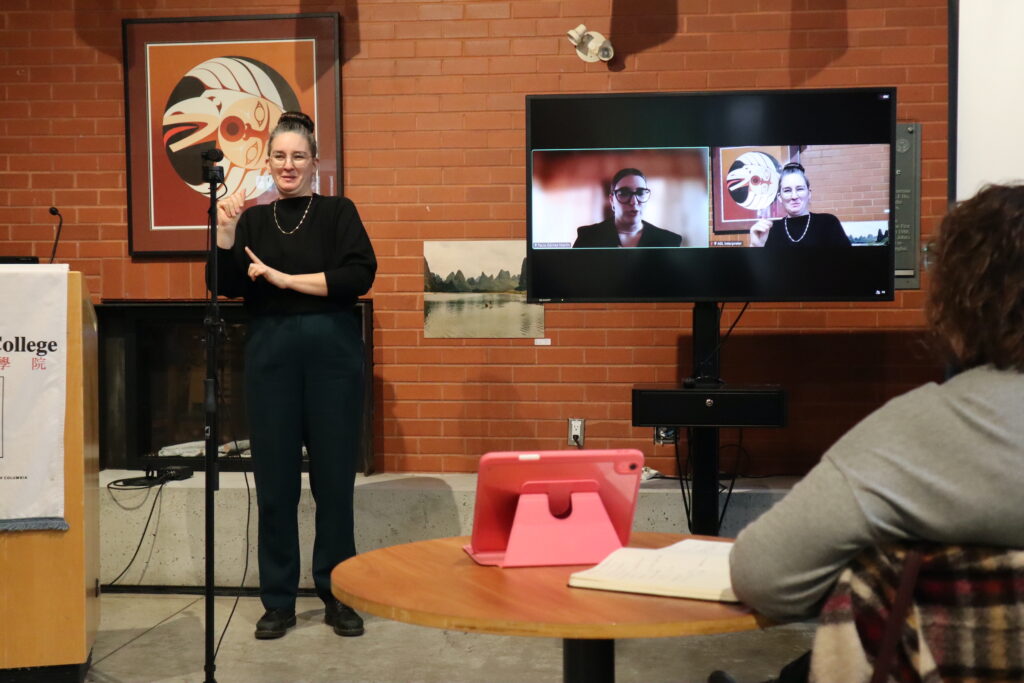
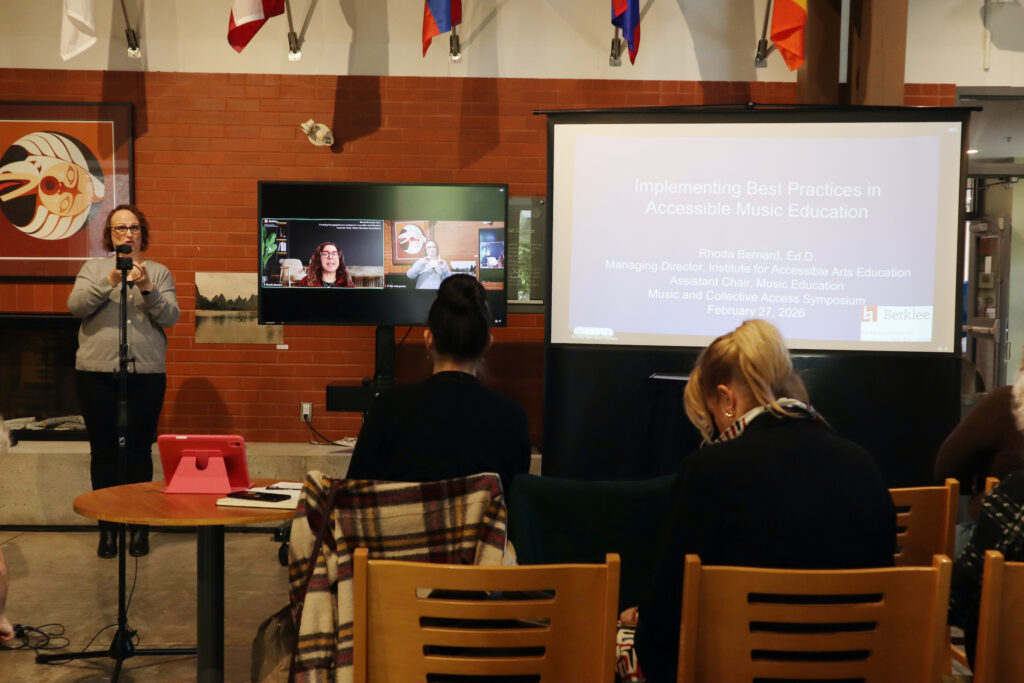
Rhoda Bernard, the Founding Director of the Berklee Institute for Accessible Arts Education, proposed some of her best practices in accessible music education, also available in her book published in September 2025: Accessible Arts Education: Principles, Habits, and Strategies to Unleash Every Student’s Creativity and Learning (https://search.worldcat.org/title/1536333990).
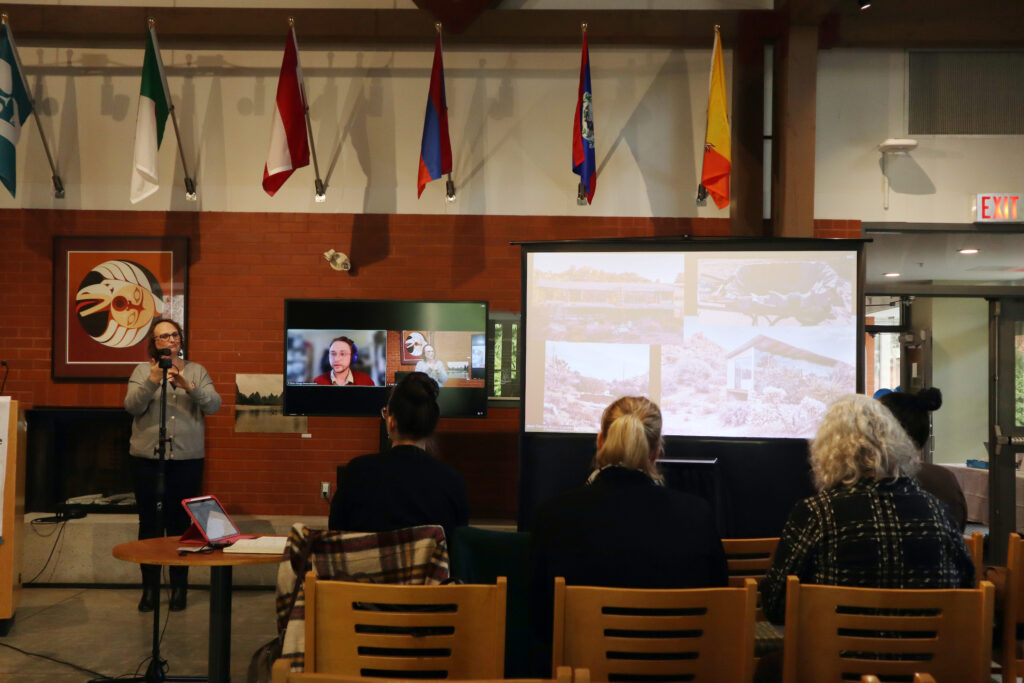
Oliver George-Brown, who intended to come present in person, had to give is presentation remotely because of a flight cancellation. He arrived the next day. His lecture was about the concept of “transecology” as a framework for creative practice which synthesises queer and ecological thinking in music compositions. His experiment, led in a desert, triggered questions about physical accessibility of the testing ground, which he and his team currently work on to improve.
Gabrielle Berry led us to an exploration of current and historical captions and audio-description tracks, especially in the silent film era (1890s-1920s), a ‘golden age’ for D/deaf audiences. Her title slide, representing a black and white picture with people holding “UT UT RE SI UT RE” signs, made all the musicians in the room hum “God Save the King.”
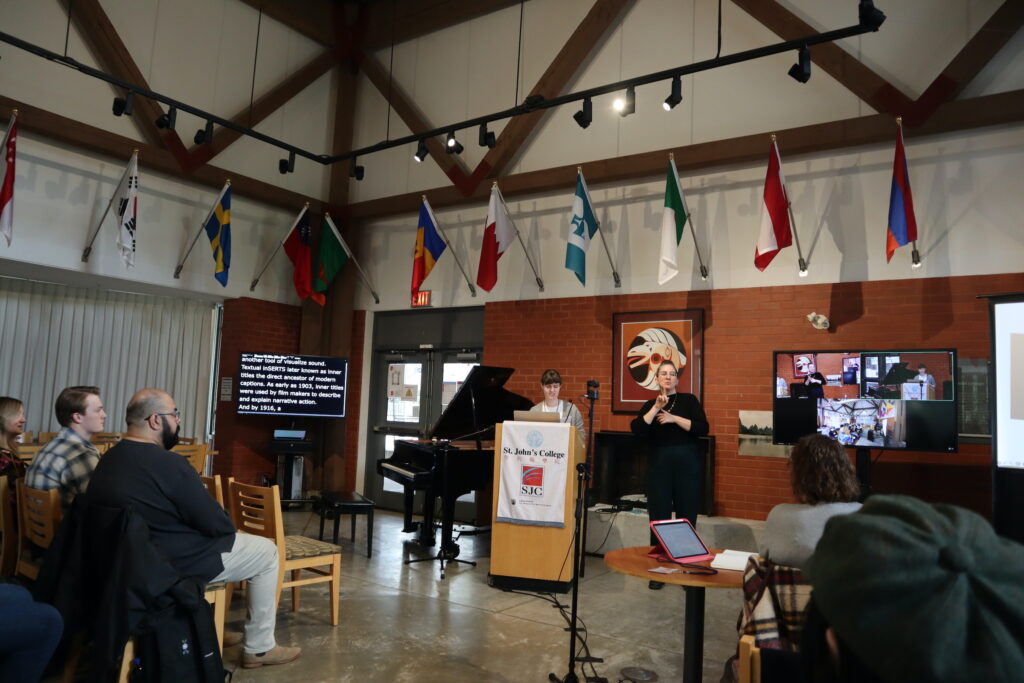
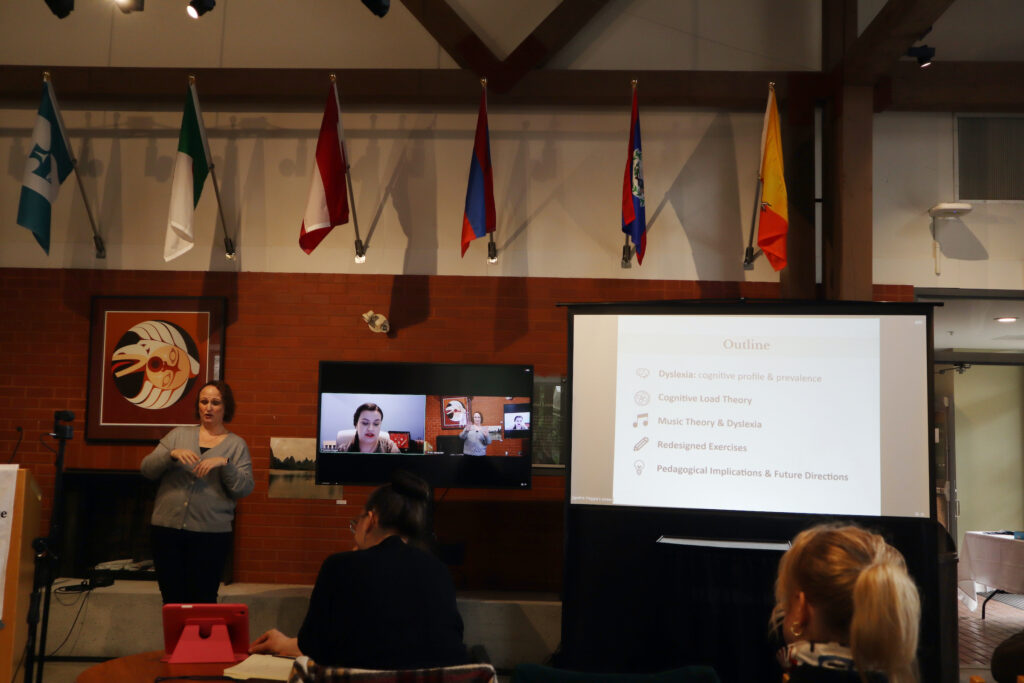
Caroline Heggie taught us how to better support dyslexic learners in music theory pedagogy, in an effort to make music education more accessibility and inclusive, giving strategies for music educators and examples of improvements which can be applied on music theory tests and exercises.
Cecilia Hiros presented the concept of theory of ‘eye-music’, a deaf and hard-of-hearing form of knowledge, with a practical example of the composer Cevanne Horrocks-Hopayian’s piece Inkwells (2016), through a score which can be both felt and seen in performance.
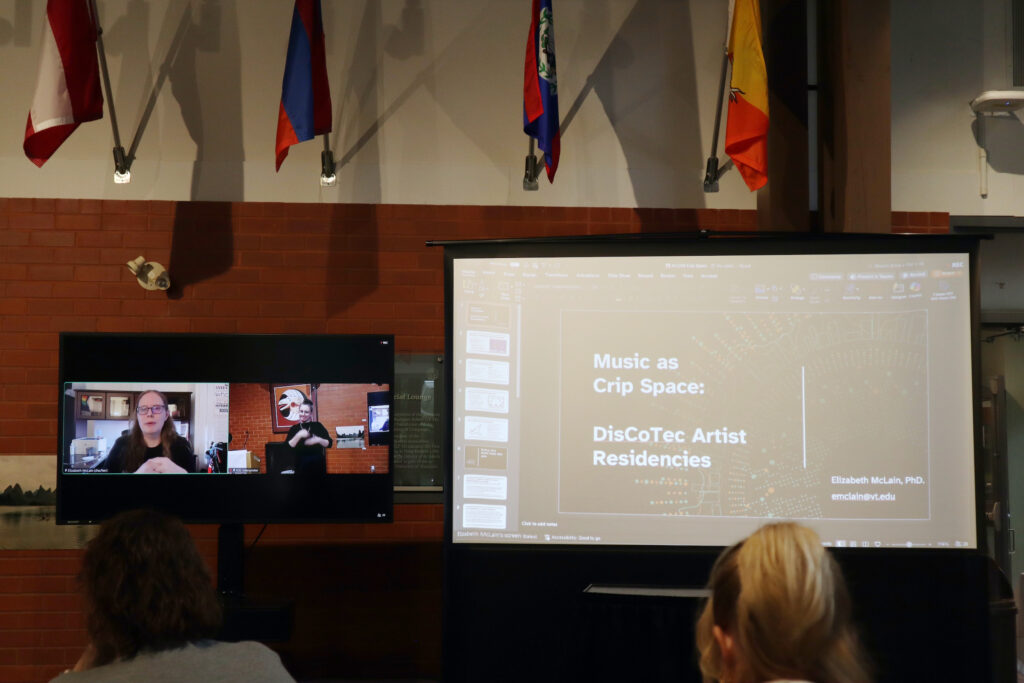
Elizabeth McLain gave us an overview of the DisCoTec Artist Residencies, particularly on a performance in October 2025 at the Center for the Arts at Virginia Tech, with Gaelynn Lea, Molly Joyce, Adrian Anantawan, and the Music Inclusion Ensemble, and the feedback received post-concert.
Bruce Petherick presented his performer’s perspective on inclusion and community as a neurodivergent musician, composer, conductor, and accessibility consultant, from personal storytelling to research takeaways. As an example of his work, he showed us how he co-designed an accessible rehearsal and performance space in his role as Artistic Director of the White Rock City Orchestra.
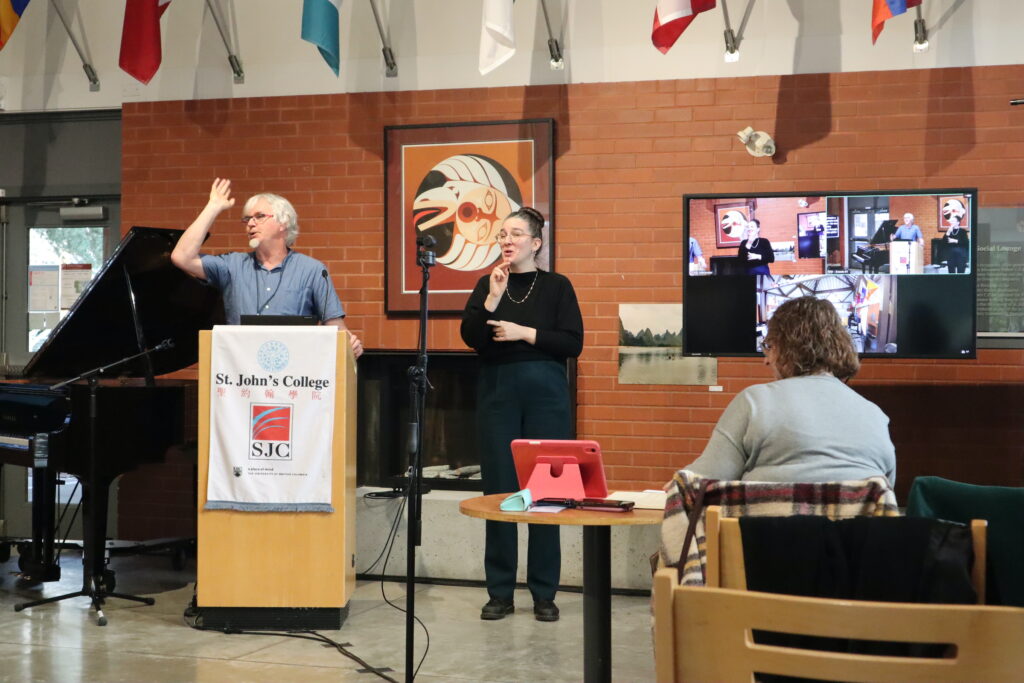
Michele Cheng and Micah Huang, multi-instrumentalists and colleagues in the Harvard University Creative Practice and Critical Inquiry PhD program, gave us a remote lecture-performance of her work, exploring their marginal positions in relation to American musico-cultural identities and genres, which allows Michele, who has a rare inner ear disorder, to experiment musically with this hearing condition.
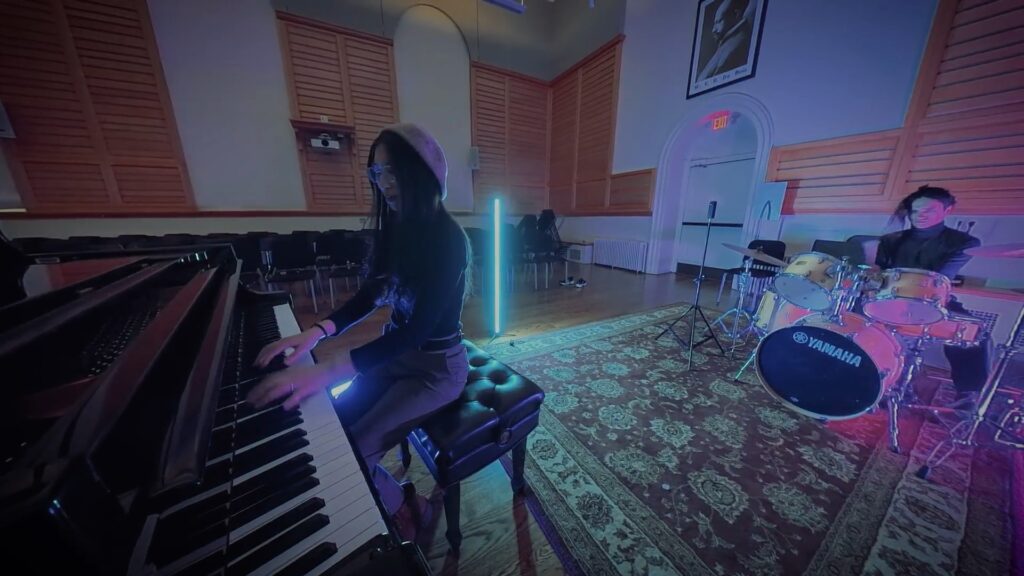
Jonathan Sang-Joon Lee, a K-12 music educator, talked about underrepresented musical practices, learning contexts, and cultural perspectives of East Asian students in Vancouver, giving examples of pedagogical strategies and showing cases of students who integrate their intersectional identities to their musical practices
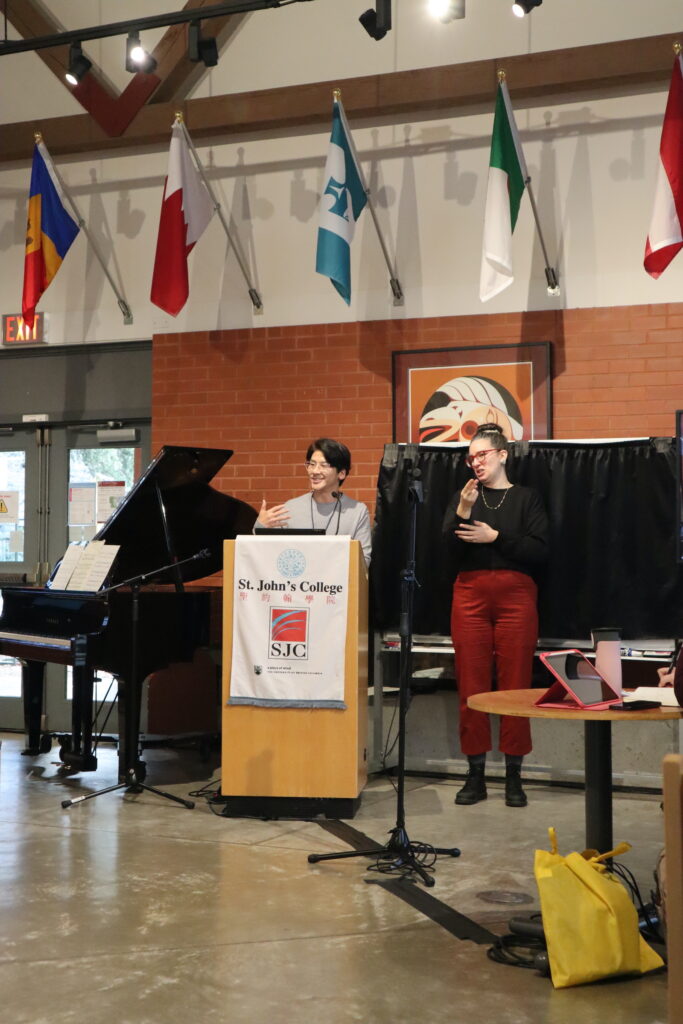
Dena Kay Jones gave the second lecture-performance, through her expertise, research, and performance experiences centered on the music and career of the blind composer Joaquín Rodrigo. Her research offers ways to bridge music, cultural identity, and community-based interaction between blind and sighted individuals. During her presentation, she invited audience members to use a blindfold to better experience the music she was playing on the piano.
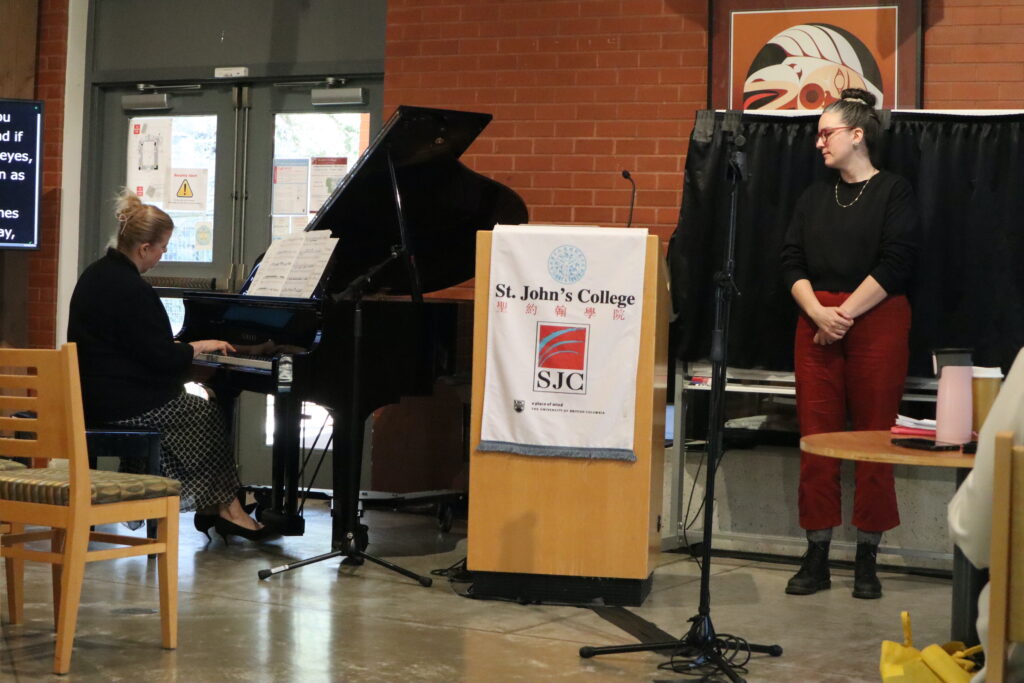
Michael Carter talked about ableism in music, especially in his experiences as an improvising jazz musician, highlighting the contradictions between ideals of improvisation and lack of access in performance expectations, particularly when seen from a disability studies perspective.
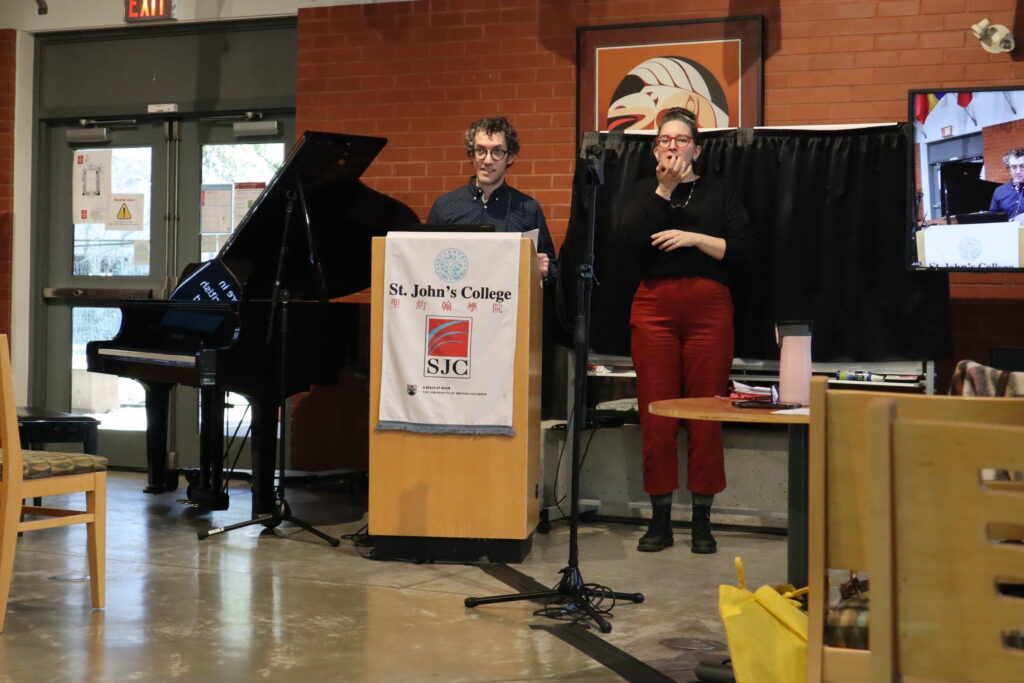
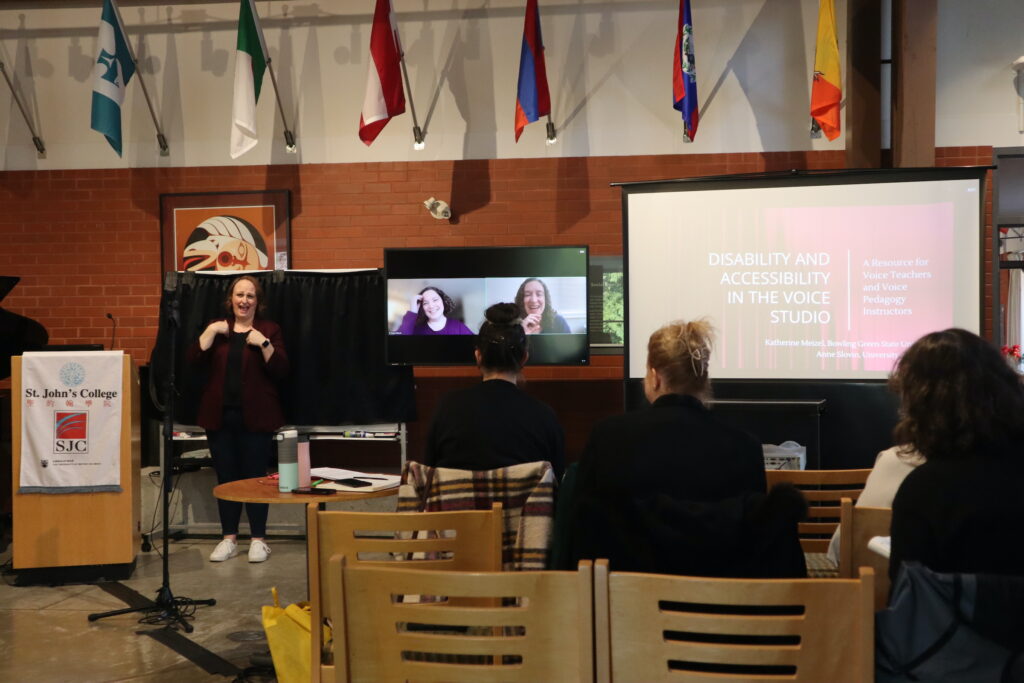
Anne Slovin and Katherine Meizel presented their Resource for Voice Teachers and Pedagogy Instructors, a collection of essays and videos focused of Disability and Accessibility in the Voice Studio, which will be published online during the summer of 2026.
Sara Beth Lyons led us to an exploration of Mad methodology and radical creativity through Black social justice movements, Disability justice movements and Feminist movements. She exposed cases of Black disabled women artists using a feminist analysis with a disability justice lens.
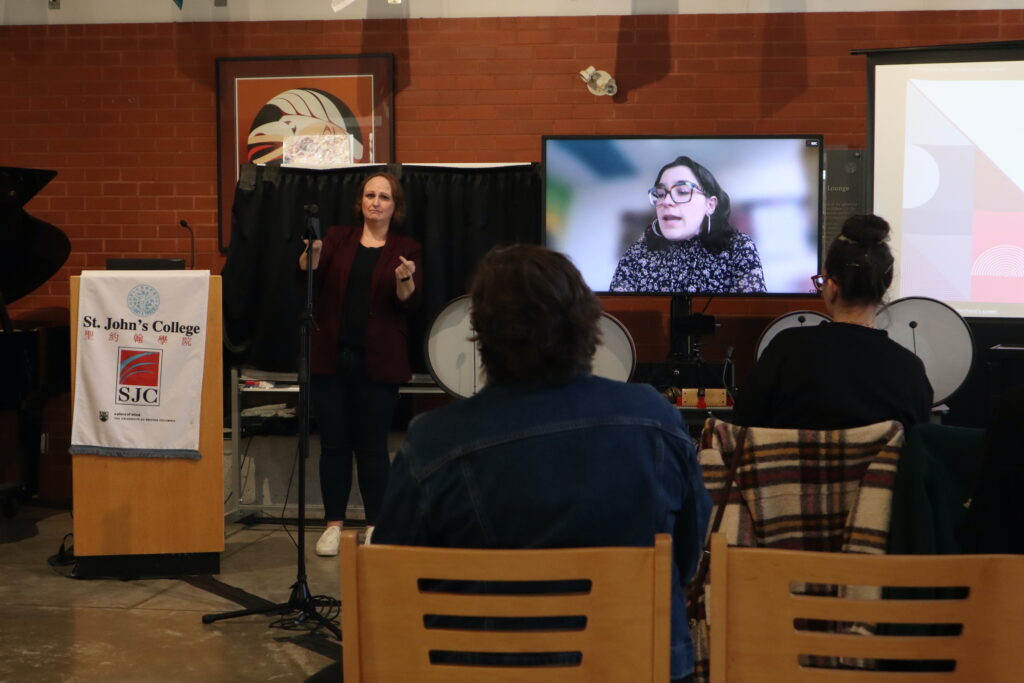
Rena Roussin’s lecture was in two parts. In the first part, she shared considerations about disability studies, disabled artists in classical music in Canada, and care, seen from a disability justice lens. In the second part, participants discussed their own experiences, after Rena asked the following question: “What forms of disabled musicking and care you wish the classical music industry implemented or interacted with differently?”
The transcript of the in-person conversations and the content of the online chat are available here: https://musiccollectiveaccess.com/rena-roussins-session-conversations-and-chat/
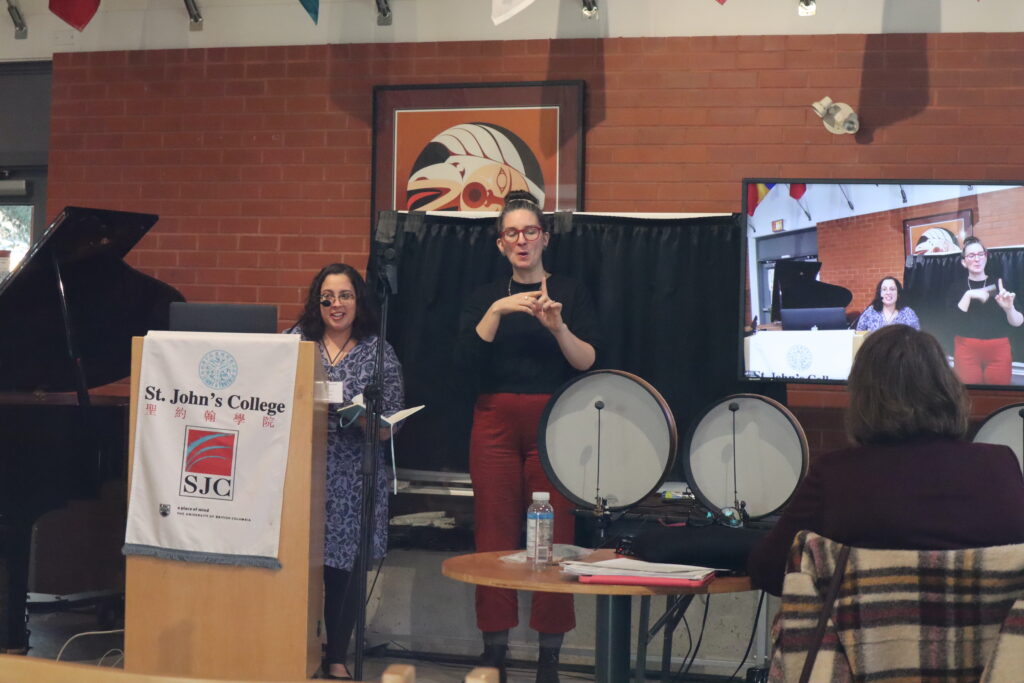
Anabel Maler looked at sign language cover songs as music analysis, arguing that Deaf listeners are expert formal analysts who use sign language to convey analytical insights into the form of existing pieces of popular music through the medium of sign language cover songs. On this topic, see her book, Seeing voices: analyzing sign language music (https://search.worldcat.org/title/1452598198).
Keynote speaker
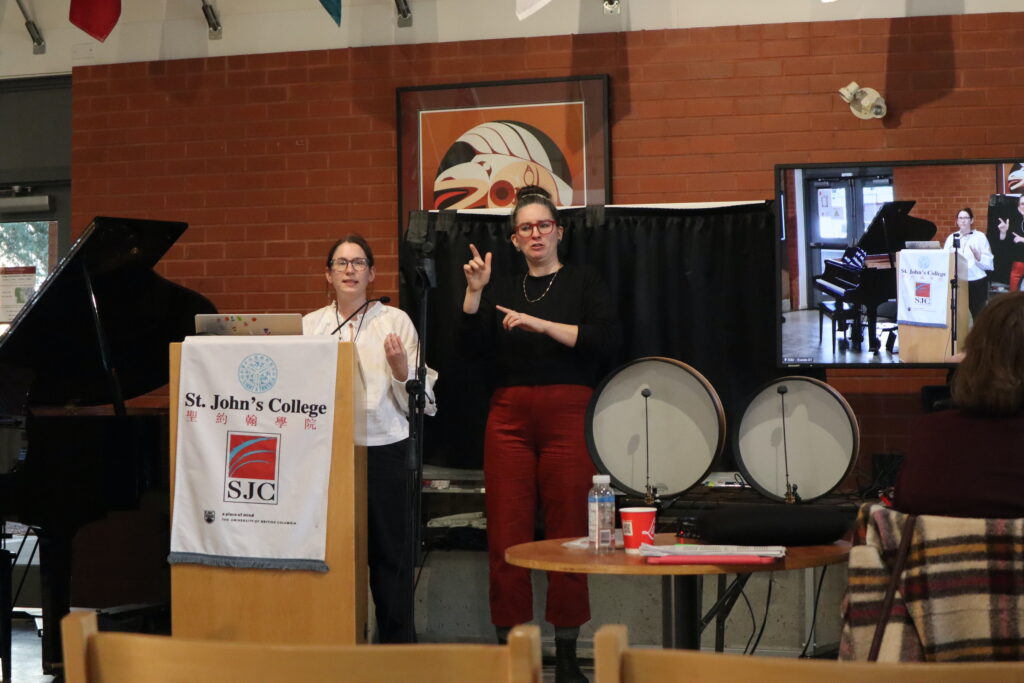
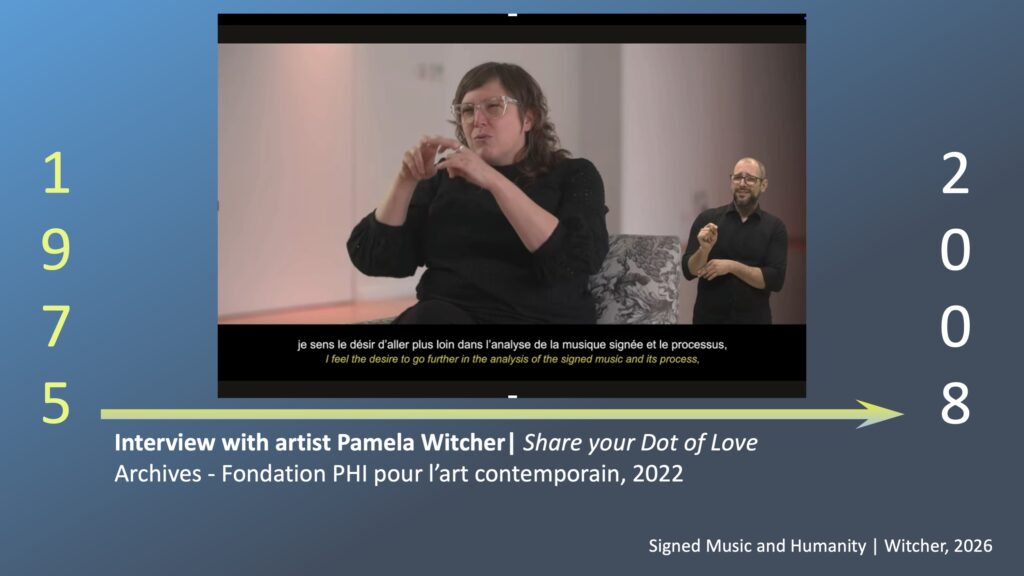
We were happy and lucky to receive Pamela Witcher, multidisciplinary artist, director, mentor, interpreter, translator, cultural mediator and curator, who gave the symposium’s keynote. She presented her career, chronologically and artistically, highlighting the different ways Deaf artists can contribute to the overall artistic world.
Workshops
Four workshops were given during the symposium.
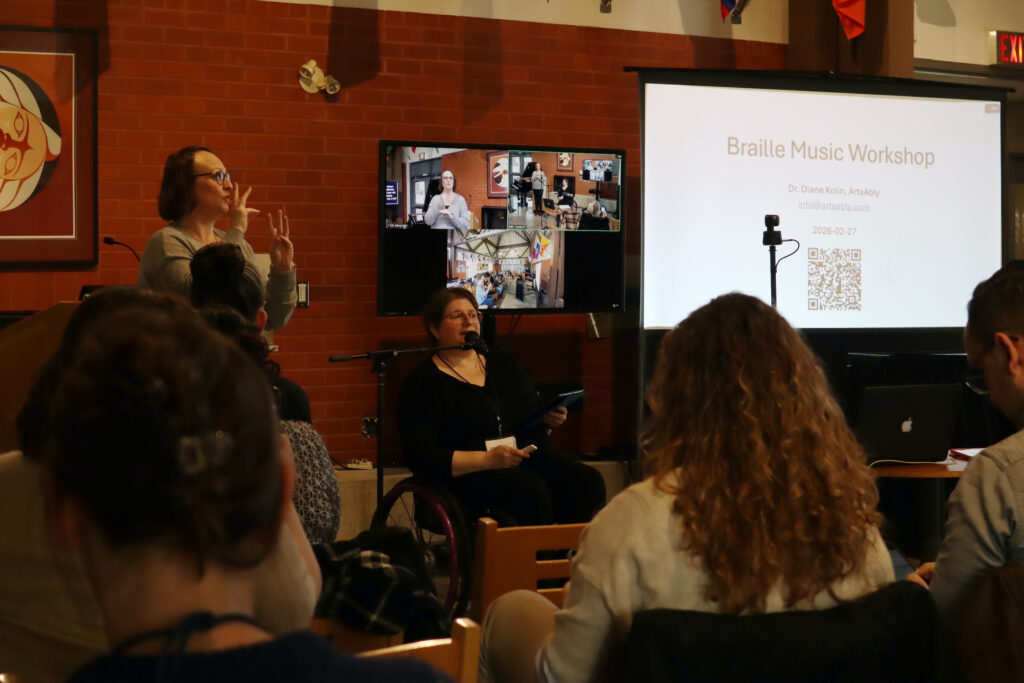
Diane Kolin, founder and director of ArtsAbly, gave a Braille music discovery workshop, first explaining what Braille music is, then talking about the different tools available for blind people to read and write music. Finally, using one of the tools called Braille Music Notator, created by Toby Rush, to analyze a Braille music score version of Hey Jude by the Beatles, also physically available for participants to experience in the room.
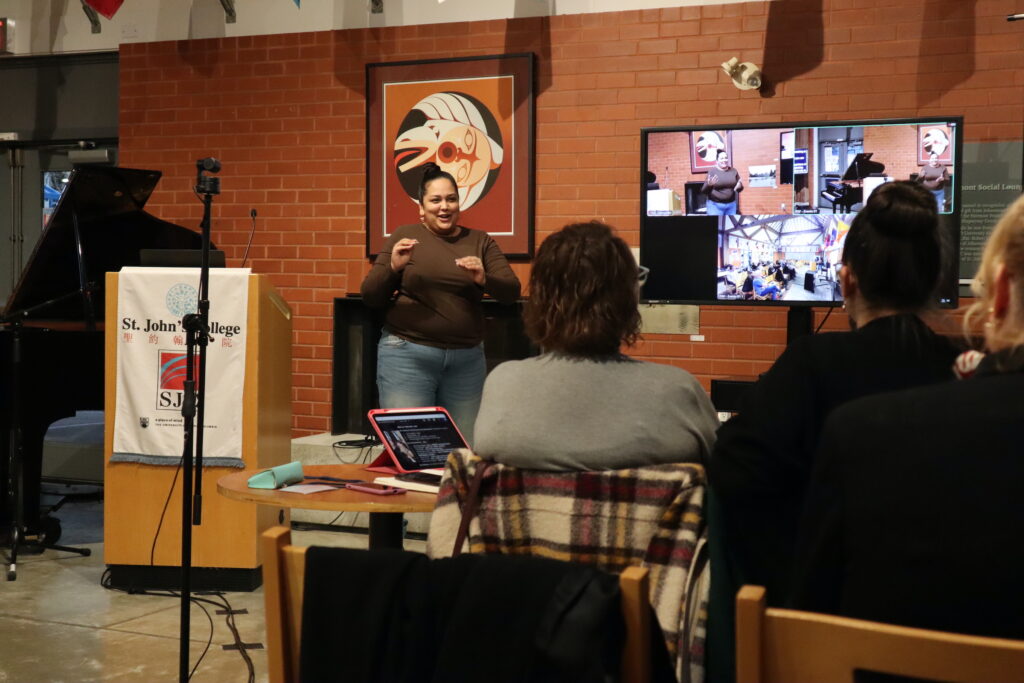
Gaitrie Persaud-Killings, ASL coach, ASL music performer, and actress, founder of Phoenix the Fire, gave an American Sign Language (ASL) Music singing workshop, first explaining the concept of signed music with vernacular sign language, and then giving examples of ASL Music performances.
Diane Kolin gave a second workshop about adaptive and new technology instruments. The first part showed examples instrument funds and research labs, of one-handed instruments (which can be played by musicians using one hand only), of stands and mounts, of 3D Printed adaptations and instruments, and of new technologies instruments and online platforms. The second part gave the participants an opportunity to try some of the instruments, including the Adaptive Use Musical Instruments (AUMI) used with a tablet.
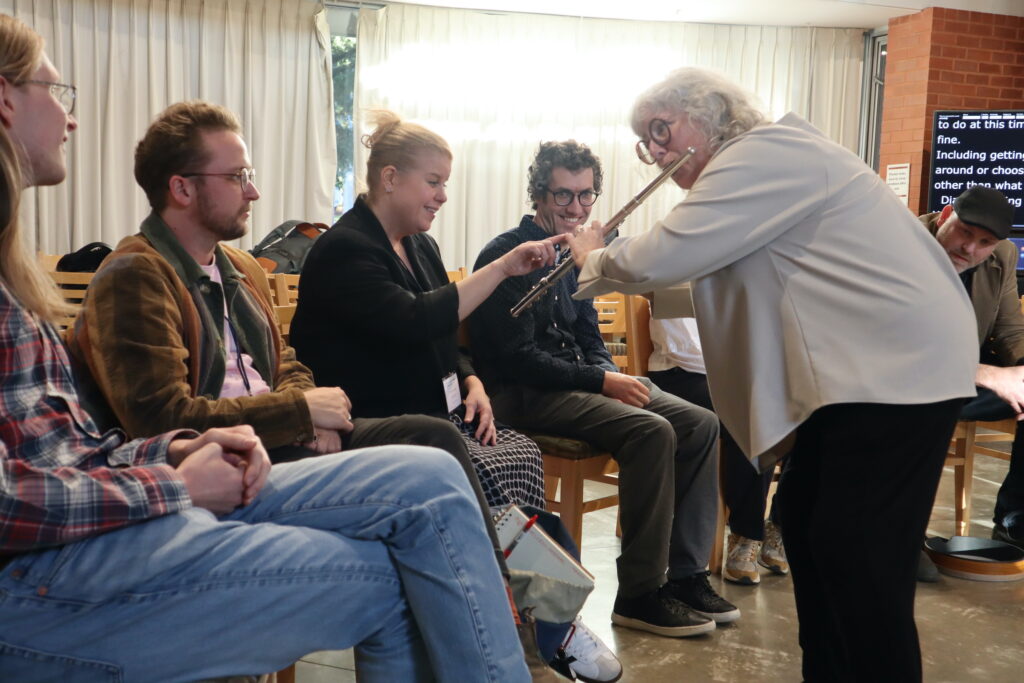
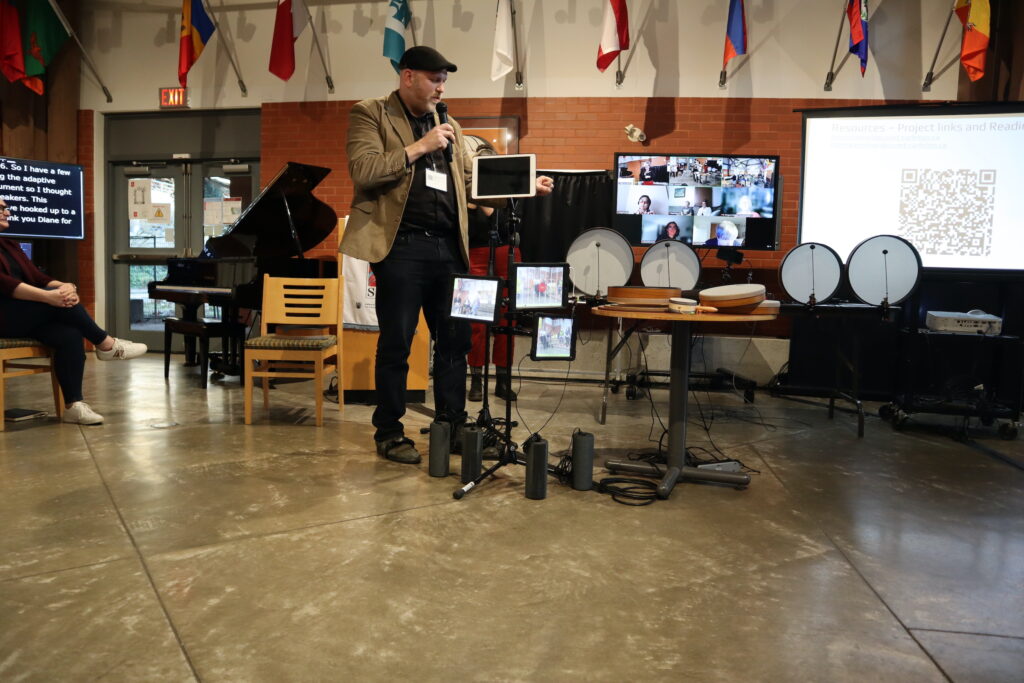
Ellen Waterman, Professor and Helmut Kallmann Chair for Music in Canada at Carleton University, and Jesse Stewart, composer, percussionist, artist, and Head of the Carleton University Music program, gave the last workshop. It was the perfect closing of the symposium, exploring practical, embodied approaches to musical accessibility and inclusion, through improvisation practices. Ellen used storytelling and her flute, Jesse used his drums, percussions, and an AUMI installation which allowed participants in person and online to interact.
Social dinner
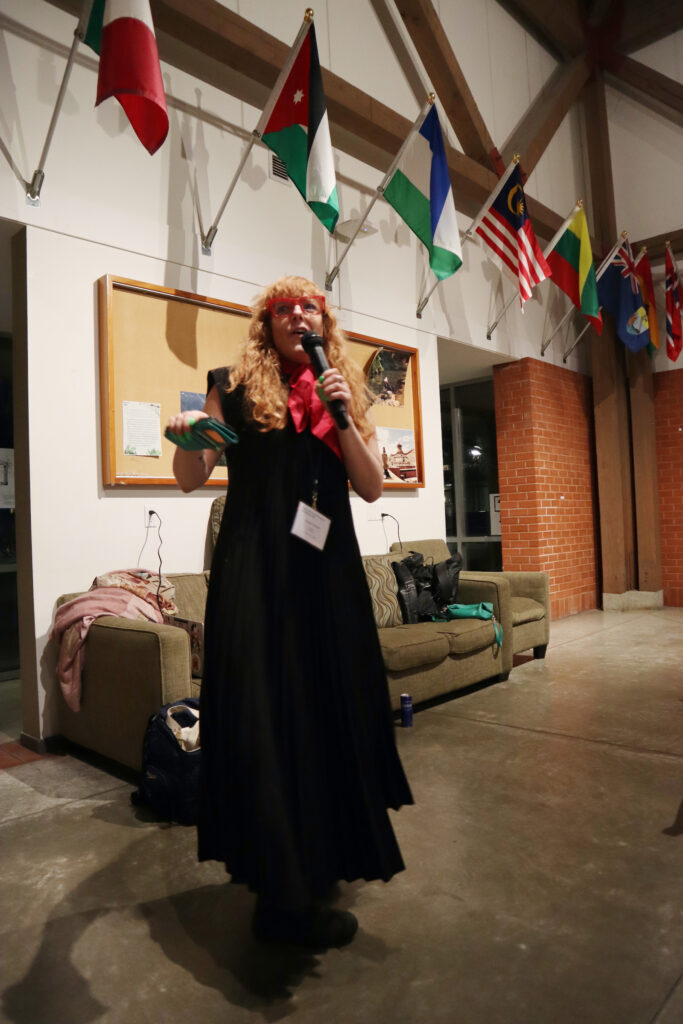
On the first night, participants had the occasion to mingle and connect, exchanging with other participants about their own research or continuing conversations shorten by the time constraints of the lectures and workshops. During the dinner, Angela Chalmers, Acting Executive Director of our community partner, Kickstart Disability and Arts Culture, presented their activities in the Vancouver Area.
Conclusion
We would like to thank the 105 people who joined over the two days of symposium, in person and online. The feedback we received was very positive. Now that the event is over, the next phase will consist of finding other ways to connect and keep the conversations alive with the participants.
If you have questions or comments about the Music and Collective Access Symposium 2026, don’t hesitate to contact us.