


As I just gave my last concert of 2025 yesterday night, I want to reflect on my experience as a disabled singer in vocal ensembles using a wheelchair.
Images descriptions and alt texts are available for each image.
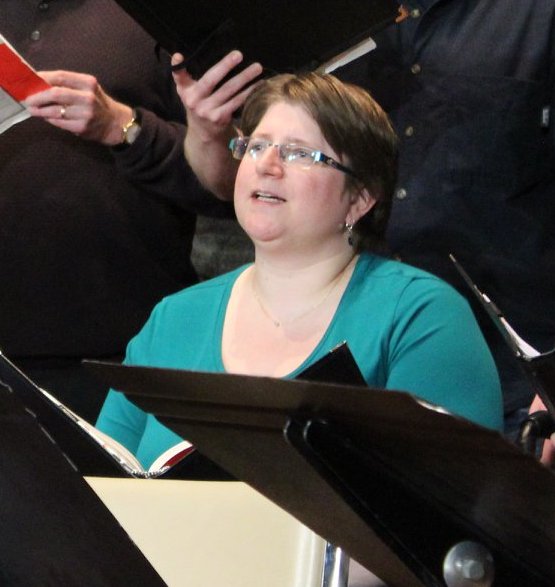
If you know me, you know that I love singing. I have been singing with choirs and vocal ensembles for many years. What a great experience it is to sing with others, feeling the energy of the surrounding performers, the singers, the orchestra, the conductor! I am also very grateful and happy to be visible as a performer with disabilities, showing people in the audience (including audience members with disabilities) that “yes, it is possible to be disabled and to perform.” It is possible. Yet, it is complicated.
The performance world is not built for people with disabilities. I face issues each time I perform at a concert. The groups with which I am singing are helpful, accommodating, kind. They want me to feel as welcome and included as possible, and it works. In rehearsals, once my spot is decided, usually first row just in front of the conductor, things are easy. People get used to me, they know the space my wheelchair needs, they create some room so that I can circulate, go to the washrooms, have access to scores, etc.
But every time there is a concert, it gets complicated. Venues chosen are deemed accessible, but as usual, accessibility is thought for the audience, not for the performers. I impose to have all information related to accessibility for performers in the venue maximum one week before the concert, which does not always happen. Occasionally, accessibility details are forgotten and I need to figure out last minute, which is quite stressful: the accessible door is locked when I arrive, or the accessible washroom is not really accessible, or the automatic door opener is not activated, or there is a table installed just in front of the foldable stair lift which is never used and nobody knows where the key is. It is not always the case, but when it happens, I lose some autonomy, which is not okay.
A chair is removed on stage with the hope that it will be enough for me to see the conductor. We usually end up chatting with the people performing around me to switch seats. Dress rehearsals are usually fine, but before the concert, green rooms and change rooms are usually upstairs or downstairs. When there is an elevator or ramps, I might be able to access the change room, but to get to the stage, I need to take the same accessible path as audience members, which means that I have to get onstage before the audience gets in, and then I am stuck in the corner of the stage while others get to do a warm-up in the green room. I feel quite lonely. I not only miss the warm-ups, I can usually not mingle with others before the show, I miss the excitement and cheerful ‘toi toi toi’ exchanged between performers, or the encouraging words of the conductor before the concert. I always feel weird when I am waiting by myself while the audience gets in.
During the concert, most of the time people in the audience cannot see me since I am usually sitting behind a double bass or a cello while everybody else is standing, or sometimes with a group of isolated sitting performers, far from the other singers standing on stairs or risers – not a big deal since the most important is the sound of an ensemble of voices singing together, but if we think in terms of visibility of each singer part of the group, those sitting are hidden. Maybe there would be ways to change this?
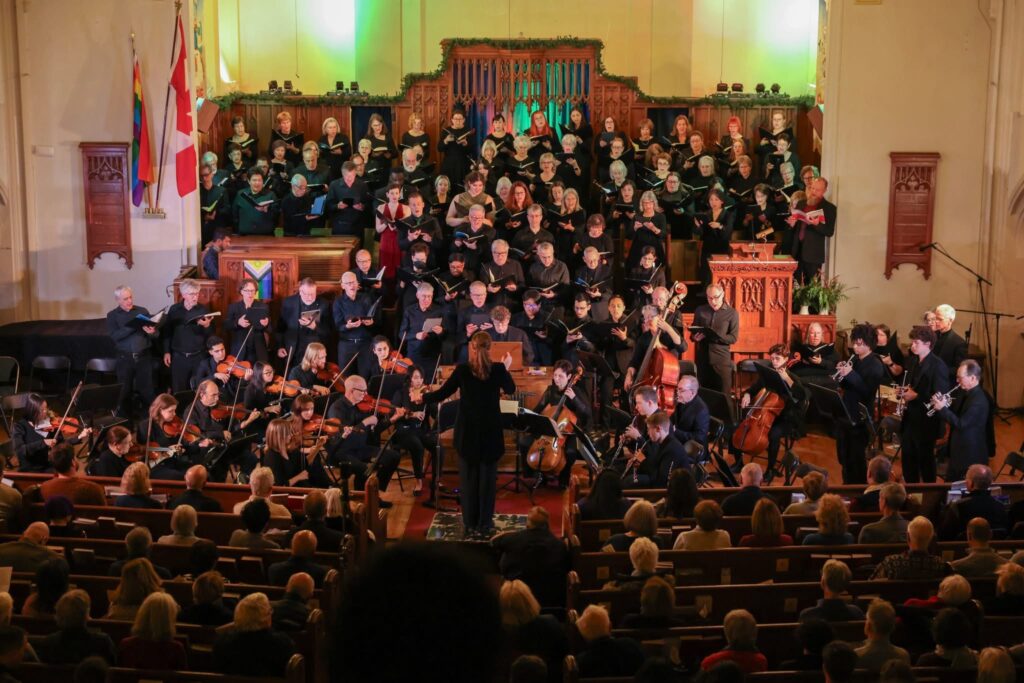
At the end of the concert, I have to wait until the audience has cleared the space to go back to the change room. I am usually the last one there. I miss the post-concerts cheers. Or sometimes, when it is more convenient, I just decide to keep my coat and bag hidden close to my corner and leave immediately from the stage, without saying goodbye and ‘good job’ to other performers.
There is nobody to blame. The venues are not built for performers with disabilities. I just wish we could do better. I wish there was more communication to figure out together how there could be more inclusion with the existing accessibility, how I could do the warm-up with others, how I could roll onstage with all the other performers, maybe by creating a clear path for me and those with limited mobility to get in, which is not always easy, especially for big ensembles with an orchestra and a lot of singers. But maybe we could try to figure out together. These discussions should happen for each concert, since each venue has a different setting, and should be mandatory with guest conductors who are not necessarily aware that some singers in the group are disabled and have access needs. Maybe these singers require more than a spot hidden behind the orchestra or a chair taken away. These conversations don’t take a lot of time, just a few minutes to talk about access needs. I am sure we could do better! People are full of goodwill, they just don’t know about these details or they do not think about it.
On top of that, I had to deal with the inaccessibility of subway stations. In Toronto, a lot of elevators are broken or missing in very important stations. Yesterday, the elevator to go out of the station close to the performance venue was broken. I had to find escalators wide enough for my wheelchair (fortunately there was one) and ask a passenger to hold my chair while we were getting up (by the way, not all wheelchair users can do that). As a result I was late for the dress rehearsal, I arrived just on time but I was stressed. After the concert, since I could not enter the station close to the venue, I decided to roll down to the next station on the line, 15 minutes away. This one was marked accessible but the elevators, which were newly built, were not in function yet!!! I had to go down the staircase on my bottom, dragging my wheelchair behind me step by step, to catch the subway (by the way, not all wheelchair users can do that).
Someone asked me if I was using the wheelchair transportation services of the city (in Toronto it is called WheelTrans). I am not. This service is highly unreliable. You have to book it days in advance and you never know when they will pick you up, they are sometimes half an hour late, sometimes an hour, so you are never on time. When I can, I prefer to take the regular transit system (by the way, not all wheelchair users can do that). Otherwise I take my car (yes, I can drive, exactly like anyone driving an automatic transmission, with hand controls), but then it means that I need an accessible parking spot close to the venue, which are rare to find. I end up spending more time driving around to find a spot than the time I would have spent in the subway.
These problems have nothing to do with the accessibility considerations of the venue but they certainly add to the struggle. Too bad because the concert was great!
Not everything is negative. So far, the concerts of these past few months were successful and rewarding, I enjoyed all of them. There were some discussions regarding accessibility, and we were able to figure out how to navigate the performance venues. I know that accessibility might seem frightening, but it is not that complicated. It just starts with communication. And then, the music can happen.
I would love to see more singers using mobility devices or white canes or assistance dogs in choirs so that these conversations serve a group of underrepresented members. My dream would be to work with choirs or ensembles that would start considering broader inclusion principles for performers with disabilities. Access guides should be created before the concert. Venues should be accessible from the entrance to the green room, making sure that all buttons at doors are activated before we arrive, and elevators and lifts are clear to use, and keys to activate them are available. Green rooms should be ready to welcome people using mobility devices, white canes, assistance dogs, etc., for them to do the warm-ups and cheers with everybody else. Settings on stage would allow everybody to enter together. Placements would take into account people’s needs. Those who need to sit and see the conductor would also be seen by the audience.
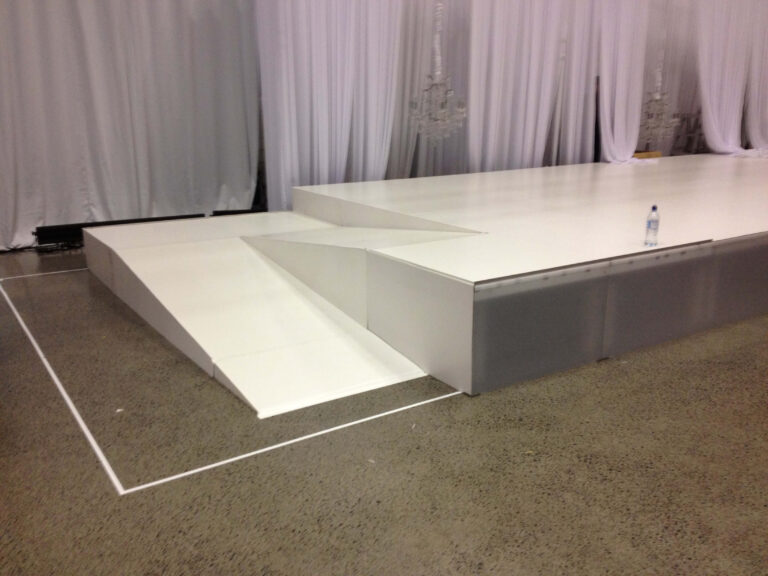
I created a company called ArtsAbly which carries these ideas of discussions, inclusion, communication. I help ensembles and festivals to create their access guides. I highlight the works of artists with disabilities through a podcast. Sometimes I feel unheard, but I continue, with the hope that venues will start considering performers and artists with disabilities like any other performer or artist. Today, many solutions exist. Some use the space as it is, some might require a rental or the building of a custom ramp to access higher parts of the performance area. Once you figure out what works for your budget and specific setting, you can reuse the same strategy and the same tools for all performances. It will be in your mind and in your paperwork. It is an investment in inclusion.
Are you an artist or performer getting frustrated by inaccessibility issues? Please send me an email and tell your stories. I want to see more words and hear more voices to show the performing world that these issues exist.
Are you representing or working for an ensemble willing to become more accessible? Let’s start this conversation!
Diane Kolin, December 13, 2025.
#accessibility #performers #disability #choirs #choirsinging #artsably
Diane Kolin is a singer, a music educator, a voice teacher, a musicologist, and a disability rights activist. As a singer, she performs in various genres, from jazz to Baroque music and French chanson repertoire. She teaches voice to children and adults. She is the founder of ArtsAbly, a company offering diverse activities related to disability in the arts, including workshops, professional developments, lectures, free resources, and a podcast promoting the work of artists with disabilities, ‘ArtsAbly in Conversation.‘